

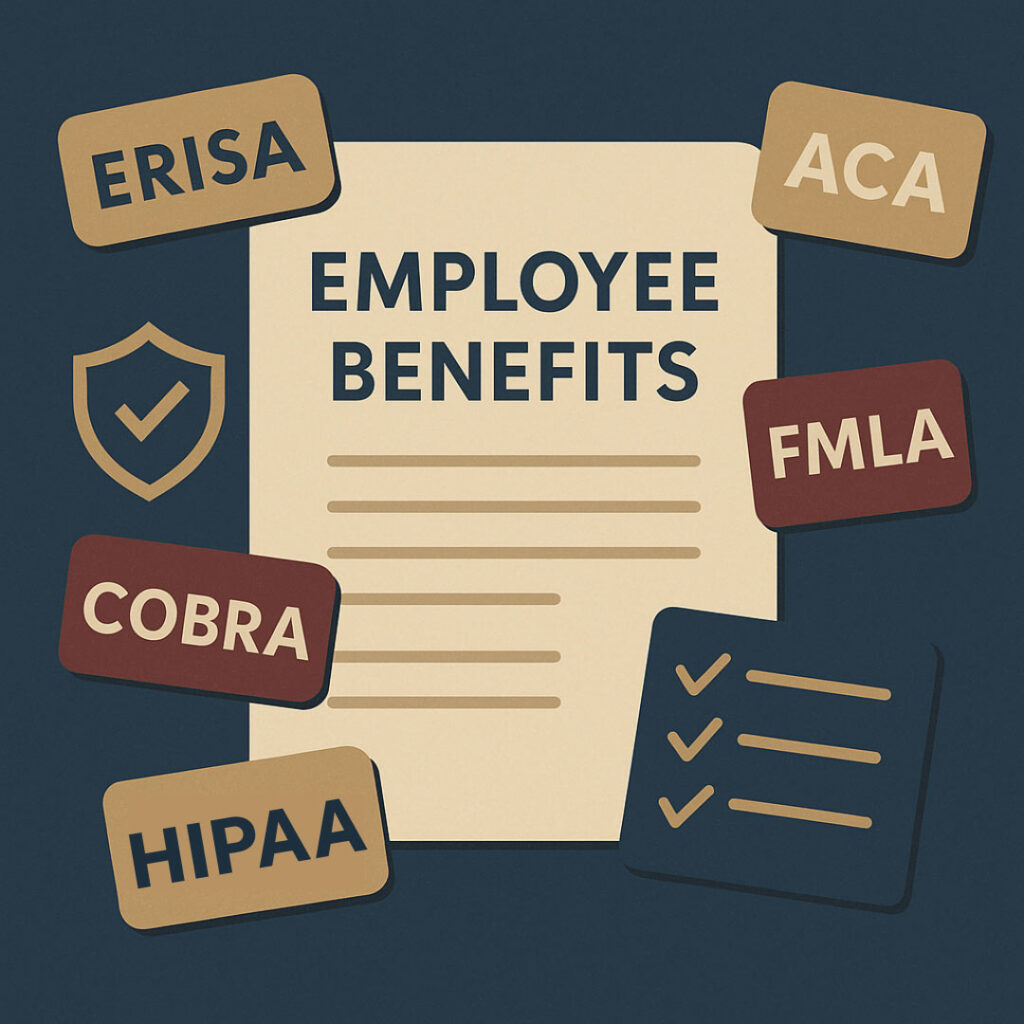
Keeping up with employee benefits has never been simple—especially with the growing list of acronyms that shape compliance and administration. As 2026 approaches, Colorado employers are navigating evolving regulations under ERISA, COBRA, ACA, FMLA, HIPAA, and more. At Conexus, we help businesses cut through the noise so you can stay compliant, protect your people, and avoid costly mistakes.
Below is a clear, practical overview of what Colorado employers need to know heading into 2026.
1. ERISA: The Foundation of Employee Benefit Plans
The Employee Retirement Income Security Act (ERISA) governs most employer-sponsored benefits, including medical, dental, vision, life, disability, and retirement plans.
For 2026, employers should ensure:
✔ Updated Plan Documents & SPD
Every benefit plan requires a current plan document and summary plan description (SPD). If your SPD is provided by the carrier, remember: their documents don’t always meet ERISA standards. Most employers still need a wrap document to stay fully compliant.
✔ Annual Form 5500 Filings
If you have 100+ enrolled employees in any welfare plan, you may need to file a Form 5500.
Starting in 2026, the Department of Labor is expected to continue tightening enforcement and increasing audits.
✔ Fiduciary Responsibilities
ERISA requires plan sponsors to act in employees’ best interests. This includes reviewing benefit costs, ensuring accuracy of plan information, and maintaining documentation.
2. COBRA: Continuation Coverage Done Right
COBRA remains one of the most common areas where employers unintentionally make errors—leading to penalties, fines, and liability.
In 2026, Colorado employers should pay close attention to:
✔ Eligibility & Timing
Employers with 20+ employees must offer continuation coverage after qualifying events such as:
- Termination
- Reduction in hours
- Divorce
- Dependent children aging out
COBRA notices must be distributed correctly and on time. Missing a deadline can create significant risk.
✔ State Continuation (“Mini-COBRA”) in Colorado
If you have fewer than 20 employees, Colorado continues to require state continuation for up to 18 months. Rules differ from federal COBRA, so employers should confirm which laws apply to them.
✔ Premium Handling
Employers must collect and remit premiums properly—even one mishandled payment can cause compliance issues.
3. ACA & Reporting: Still a Core Requirement
Although the Affordable Care Act is no longer “new,” compliance remains essential.
Colorado employers should ensure:
✔ Correct measurement periods
✔ Appropriate offer-of-coverage to full-time employees
✔ Accurate Forms 1094/1095 reporting
✔ Documentation of affordability and minimum value
With more enforcement expected in 2026, accurate reporting matters more than ever.
4. FMLA, FAMLI & Leaves: The Intersection of Federal and Colorado Law
Colorado employers now navigate two major leave laws:
FMLA (Federal)
- Applies to employers with 50+ employees
- Provides 12 weeks of job-protected unpaid leave
FAMLI (Colorado)
- Applies to nearly all employers
- Provides paid leave through the state program
In 2026, employers should continue coordinating these laws carefully. Misalignment in eligibility rules, payroll deductions, or job-protection requirements can create compliance gaps.
5. HIPAA Privacy & Security
Employers sponsoring group health plans must comply with HIPAA privacy rules—even if a third-party administrator handles the day-to-day details.
This includes:
✔ Protecting PHI
✔ Ensuring Business Associate Agreements are in place
✔ Training staff who handle health plan information
Cybersecurity risks remain a growing issue for benefits data as we head into 2026.
6. Mental Health Parity & Transparency Rules
Federal agencies continue enforcing mental health parity and transparency-in-coverage requirements.
This means employers must:
✔ Work with carriers to ensure parity compliance
✔ Make required disclosures available upon request
✔ Understand how cost-sharing and network access compare between medical and mental health services
7. Why This Matters: The Cost of Non-Compliance
Penalties for non-compliance can be significant:
- ERISA penalties for missing documents: Up to $110/day per participant
- COBRA penalties: $100–$200/day per qualified beneficiary
- ACA reporting penalties: Thousands per return
- HIPAA breaches: $100 to $50,000 per violation
For employers, the stakes have never been higher.
How Conexus Supports Colorado Employers
At Conexus, we work closely with Colorado employers to simplify a complex benefits landscape. We help ensure your benefit programs are compliant, competitive, and aligned with your company’s goals—while keeping the alphabet soup manageable.
Whether you have questions about ERISA documents, COBRA notices, ACA reporting, or leave coordination, our team is here to support you with clarity, proactive guidance, and a people-first approach.
Need help navigating employee benefits in 2026?
We’re here to help you make informed, confident decisions about your employee benefits programs.
Connect with our team anytime to review your benefits compliance and strategy for the upcoming year.