
If you’re a Colorado contractor or builder, you already know this: construction projects rarely go exactly as planned. Weather shifts fast, job sites change daily, materials get delivered early, and timelines move.
That’s why Builder’s Risk Insurance matters.
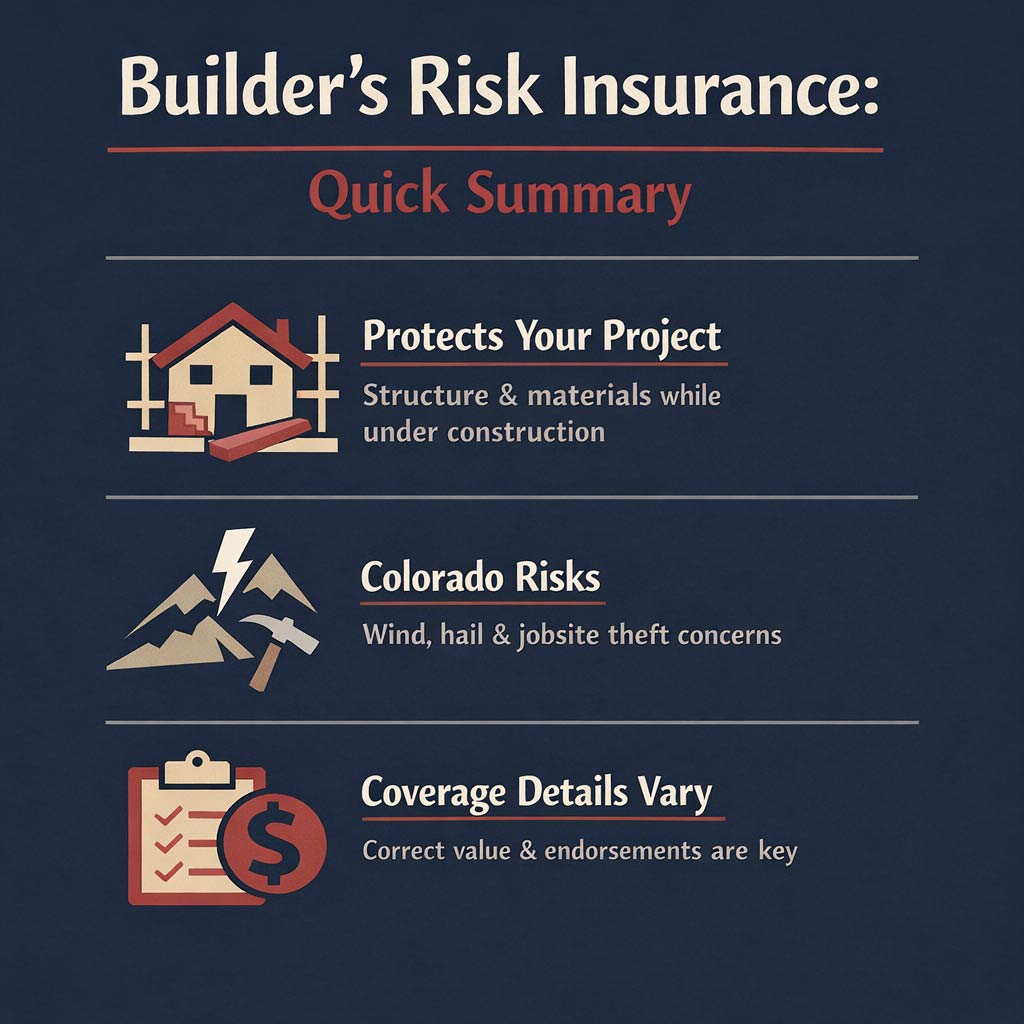
Builder’s Risk is designed to help protect the value of a construction project while it’s being built—covering the structure, materials, and certain temporary works on the jobsite. It’s one of the most common coverages required by lenders and project owners, but it’s also one of the most misunderstood.
Below is a clear, Colorado-specific guide so you can confidently evaluate whether your project is properly covered.
What Is Builder’s Risk Insurance?
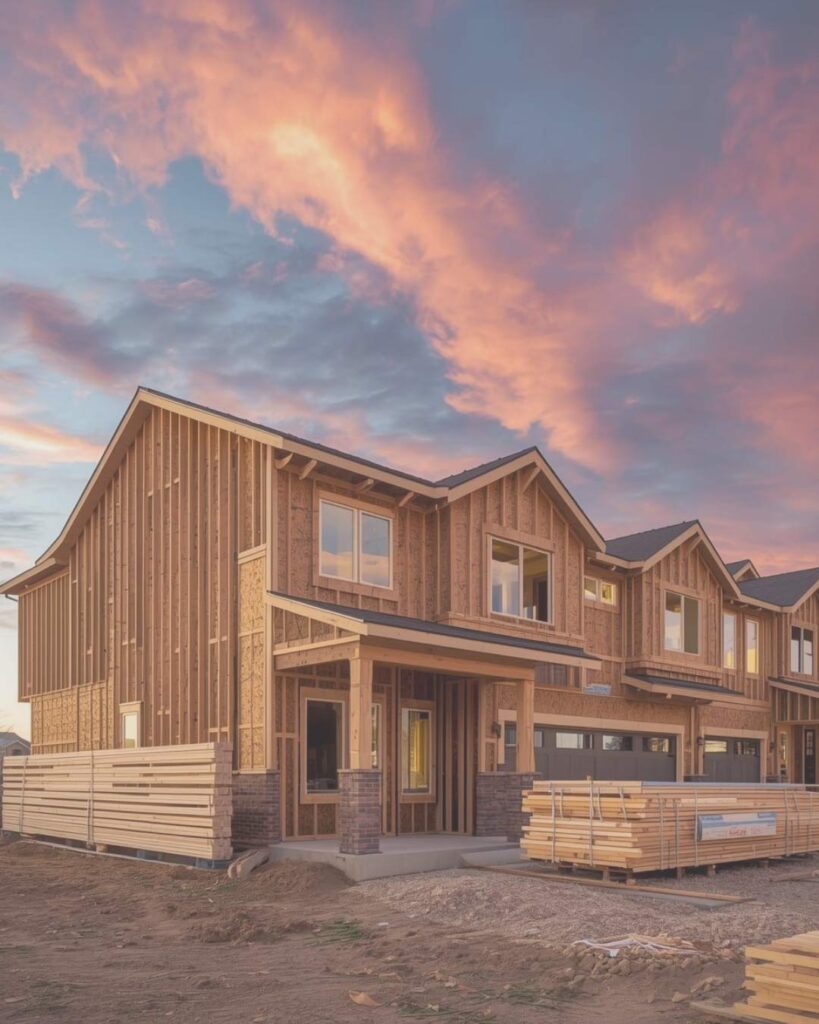
Builder’s Risk Insurance is a type of property insurance designed for buildings under construction or renovation. It generally covers the physical structure (as it’s being built), materials, and equipment intended to become a permanent part of the project.
Think of it as coverage for the “in progress” version of your build—before it becomes a finished, insured property.
Who Needs Builder’s Risk in Colorado?
Builder’s Risk is commonly used by:
- General contractors
- Home builders
- Commercial contractors
- Developers
- Property owners
- Owners acting as their own GC
- Remodelers doing high-value renovations
In many cases, the owner or lender requires it as part of the contract—especially for projects involving significant materials, structural work, or financing.
What Does Builder’s Risk Typically Cover?
While coverage varies by carrier and policy form, Builder’s Risk often includes protection for:
✅ The structure under construction
This includes framing, foundation work, roof systems, interior build-outs, etc.
✅ Materials and supplies on-site
Lumber, cabinetry, HVAC components, flooring, fixtures, and other construction materials stored at the jobsite.
✅ Materials in transit (by endorsement)
Coverage may be available for materials while being transported to the jobsite.
✅ Temporary structures (if included)
Some policies may include certain temporary structures (e.g., scaffolding or fencing), depending on the carrier and endorsements.
✅ Covered causes of loss (common examples)
Often includes damage related to:
- Fire
- Wind
- Hail
- Theft / vandalism (if properly secured)
- Certain water damage events
In Colorado, wind and hail are major exposures—and it’s exactly why Builder’s Risk needs to be structured correctly here (not just slapped together).
What Builder’s Risk Typically Does Not Cover
This is where many claims issues happen—so it’s worth being very clear.
Builder’s Risk policies often exclude or limit coverage for:
- Faulty workmanship / poor construction
- Normal wear and tear
- Mechanical breakdown
- Contractor tools and mobile equipment (usually covered under an inland marine policy instead)
- Employee theft
- Delay-related financial losses (unless optional coverages are added)
- Flood and earthquake (often excluded unless specifically endorsed)
In Colorado, flood can come into play quickly—especially near drainages, slopes, burn-scar zones, or areas with changing runoff patterns. If flood is a concern, you want that conversation up front.
How Builder’s Risk Works in Colorado (Real-World Scenarios)
Here are a few examples that come up frequently:
1) Wind destroys framing before the roof goes on
A properly written Builder’s Risk policy may cover the damage and materials—but you want to …confirm wind/hail coverage, deductible structure, and any special conditions/limits.
2) Theft of materials
Colorado jobsite theft is real. Coverage depends heavily on:
- storage method (locked structure vs open site)
- security measures
- documentation and reporting
- carrier requirements
3) Hail damages installed exterior components
If windows, siding, or roofing materials were already installed, Builder’s Risk may respond—again depending on the policy form and endorsements.
Who Should Be Listed as the Named Insured?
This is one of the most important parts of the policy.
Depending on contract structure, Builder’s Risk may list:
- Owner
- General contractor
- Subcontractors (as additional insureds or covered parties)
- Lender / loss payee / mortgagee
The correct named insured setup matters to avoid claim disputes, contract issues, or finger-pointing when something happens.
At Conexus, we review the contract language (when available) to align:
- who is responsible for providing coverage
- who needs to be insured
- what limits and deductibles are required
How Much Builder’s Risk Coverage Do You Need?
Most Builder’s Risk policies are written based on one of these values:
Completed value
The projected value of the finished structure including labor and materials.
Construction budget
Some carriers use the build cost rather than future market value.
A common mistake is underinsuring the project by only using:
- partial draw amounts
- materials to date
- outdated project values
Your coverage should reflect the full exposure of the project—especially as materials and labor costs continue to fluctuate in Colorado.
Builder’s Risk vs. General Liability: What’s the Difference?
These are not interchangeable.
Builder’s Risk
Covers property damage to the project itself (the structure/materials).
General Liability
Covers bodily injury and third-party property damage arising out of operations.
Example:
- If a fire damages the building under construction → Builder’s Risk
- If a visitor trips at the jobsite and gets hurt → General Liability
- If you accidentally damage a neighboring structure → General Liability
Most contractors need both.
Key Optional Coverages to Consider
Depending on the job, these add-ons can be important:
- Soft costs coverage (permits, interest, architectural costs)
- Delay in completion / business income
- Ordinance or law (increased costs due to code requirements)
- Debris removal
- Testing coverage
- Equipment breakdown (carrier dependent)
- Off-site storage for materials not yet delivered
Not every project needs these—but when they matter, they matter a lot.
Builder’s Risk Checklist for Colorado Contractors
Before binding coverage, consider:
- What’s the total project value and scope?
- Who is contractually responsible for the policy?
- Should subs be included?
- Wind / hail deductible structure (especially Front Range)
- Theft risk and security requirements
- Are materials stored off-site?
- Are you doing renovation or ground-up construction?
- Do you need coverage for existing structure (renovation scenario)?
- Any flood/fire zone concerns?
A well-built policy starts with the details.
Need a Builder’s Risk Quote in Colorado?
If you have an upcoming build or renovation and want a Builder’s Risk policy structured correctly from the start, we’d love to help.
Conexus Insurance Partners works with Colorado contractors and builders to simplify coverage, eliminate gaps, and keep projects moving forward.
👉 Reach out and we’ll review your project details and insurance requirements.
This material is for general informational purposes only and does not constitute insurance advice, legal advice, or a coverage guarantee. Coverage availability, limits, terms, conditions, and exclusions vary by insurer and policy. Please consult with a licensed insurance professional to review your specific project and coverage needs.