
A practical guide for landlords to protect property, income, and liability exposure
Owning rental property can be a great long-term investment—but it also comes with real risk. Property damage, tenant injuries, and lost rental income can all impact your return if you’re not properly protected.
The right insurance coverage helps reduce that risk and gives you a clearer path forward when something unexpected happens.
Why Standard Homeowners Insurance Isn’t Enough
One of the most common issues we see is rental properties being insured under a standard homeowners policy.
Homeowners insurance is designed for owner-occupied homes—not tenant-occupied properties. If a claim occurs and the carrier determines the property is being rented, coverage may be limited or denied.
Bottom line: If you’re renting out a property—even occasionally—you should have coverage designed for that exposure
What Is Landlord Insurance?
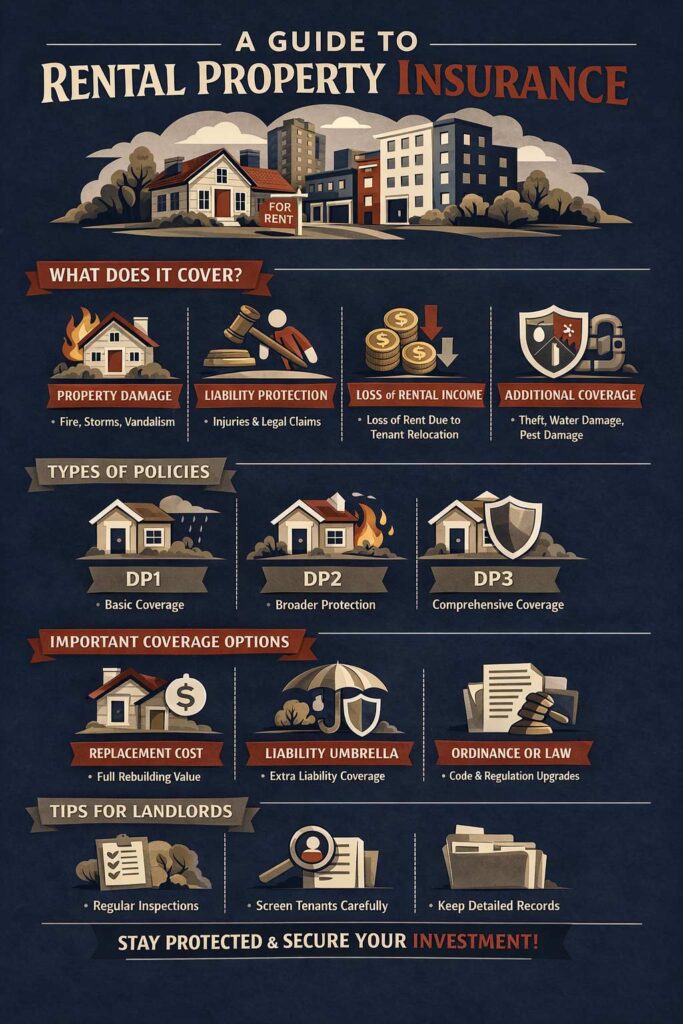
Landlord insurance (often referred to as a dwelling fire policy) is built specifically for rental properties. While coverage varies by carrier, it typically includes:
1. Property Coverage (Dwelling)
Helps protect the structure from covered losses such as:
- Fire
- Wind or hail
- Certain types of water damage
- Vandalism (depending on the policy)
2. Liability Protection
If a tenant or guest is injured on the property and you’re found legally responsible, this coverage may help with:
- Legal defense costs
- Settlements or judgments (up to policy limits)
3. Loss of Rental Income
If a covered loss makes the property uninhabitable, this coverage may help replace lost rental income during repairs.
Key Coverage Decisions to Review
Not all landlord policies are structured the same. A few important areas to review:
Replacement Cost vs. Actual Cash Value
Replacement cost coverage helps pay to repair or rebuild using current costs, while actual cash value factors in depreciation. The difference can be significant at the time of a claim.
Ordinance or Law Coverage
Building codes change over time. If repairs require upgrades to meet current codes, this coverage can help cover those additional costs.
Deductibles
Choosing a higher deductible can lower your premium, but it also increases your out-of-pocket cost in a claim. It should align with what you’re comfortable absorbing financially.
What Landlord Insurance Typically Doesn’t Cover
It’s just as important to understand what’s not covered.
Most landlord policies do not include:
- Tenant belongings (tenants should carry renters insurance)
- General maintenance or wear and tear
- Flood damage (separate policy required)
- Intentional acts by the property owner
Requiring tenants to carry renters insurance is a simple way to reduce gaps.
Additional Coverage Options to Consider
Depending on your situation, you may want to explore:
Umbrella Insurance
Adds an extra layer of liability protection above your underlying policies.
Flood Insurance
Standard landlord policies typically exclude flood damage.
Short-Term Rental Coverage
If you rent through platforms like Airbnb or VRBO, your coverage needs may be different. Not all policies extend to short-term rental activity.
Risk Management Still Matters
Insurance is only part of the equation. Good property management helps prevent issues before they turn into claims:
- Perform regular inspections
- Address maintenance issues quickly
- Keep leases clear and well-documented
- Install and maintain safety features (smoke detectors, lighting, handrails)
- Screen tenants consistently
Final Thoughts
Rental property insurance isn’t one-size-fits-all. Coverage should reflect how the property is used, the level of risk involved, and what you’re trying to protect.
If you’re unsure whether your current policy aligns with your situation, it’s worth reviewing before a claim forces the issue.