

How Much Personal Liability Insurance Do You Really Need?
When it comes to protecting your assets, personal liability insurance is one of the most important—and often overlooked—parts of your overall insurance strategy. Many individuals carry liability coverage through their homeowners or auto policies, but the more important question is: is it enough for your specific situation?
This guide is designed to help you think through that question in a practical, informed way—so you can make decisions with clarity and confidence.
What Is Personal Liability Insurance?
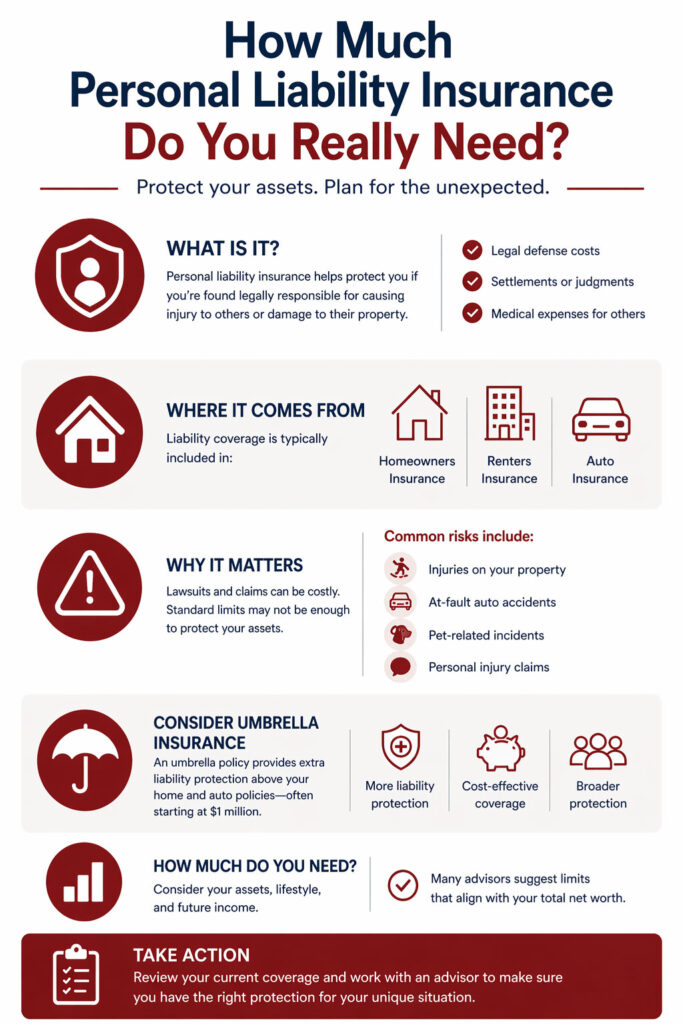
Personal liability insurance provides financial protection if you are found legally responsible for causing bodily injury to another person or damage to their property. This coverage is typically included within:
Depending on the policy and circumstances, it may help cover:
- Legal defense costs
- Settlements or judgments
- Medical expenses for third parties
Important: Coverage is subject to policy terms, conditions, and limits. Once those limits are exhausted, any additional financial responsibility may fall to you.
Why Standard Liability Limits May Fall Short
Many personal insurance policies include liability limits such as:
- $100,000
- $300,000
- $500,000
While these limits can be appropriate in some situations, liability claims—particularly those involving serious injuries or multiple parties—can exceed these amounts.
Examples of potential exposure include:
- An injury occurring on your property
- An at-fault auto accident involving multiple vehicles
- Incidents involving pets or personal activities
- Certain personal injury claims (e.g., allegations of defamation)
The key takeaway: liability risk is not always proportional to the premium you’re paying—it’s tied to the severity of a potential claim.
What Are You Trying to Protect?
A helpful way to evaluate liability limits is to consider what could be at risk in the event of a claim. This may include:
- Your home and other real estate
- Savings and investment accounts
- Future income or earnings
- Other personal assets
A commonly referenced guideline is to consider liability limits that align with your overall financial exposure. However, this is not a one-size-fits-all recommendation and should be evaluated based on your individual circumstances.
How Umbrella Insurance Fits In
For many individuals and families, a personal umbrella policy can provide an additional layer of protection beyond home and auto liability limits.
An umbrella policy typically:
- Provides excess liability coverage above underlying policies
- Often starts at $1 million in additional coverage
- May broaden protection in certain scenarios, subject to policy terms
Umbrella policies generally require minimum underlying liability limits on home and auto policies, and coverage specifics will vary by carrier.
Key Factors That Influence Your Coverage Needs
There isn’t a universal answer, but several factors can help guide your decision:
1. Net Worth and Assets
Higher asset levels may increase potential exposure in a liability claim.
2. Lifestyle and Risk Factors
Owning a home, having a pool or trampoline, hosting gatherings, or certain hobbies can increase liability exposure.
3. Driving Exposure
Households with multiple drivers or significant time on the road may face increased risk.
4. Public and Personal Activities
Board service, volunteer work, or online presence can introduce additional liability considerations.
5. Future Earning Potential
Even if current assets are limited, future wages could be subject to claims depending on the situation and applicable laws.
Common Coverage Gaps to Consider
Even well-structured insurance programs can have limitations. Areas to review may include:
- Certain personal injury exposures
- Rental or secondary property liability
- Business-related activities conducted from home
Understanding how your policies work together is key to identifying and addressing potential gaps.
A Practical Approach
Instead of focusing on minimum requirements, consider a more strategic approach:
- Review your current liability limits on home and auto policies
- Evaluate your total financial exposure
- Determine whether additional coverage, such as an umbrella policy, may be appropriate
- Work with a licensed insurance advisor to align coverage with your risk profile
Final Thoughts
Personal liability insurance plays a critical role in protecting your financial foundation. The right level of coverage depends on your assets, lifestyle, and overall risk exposure.
At Conexus, we take a consultative approach to personal insurance, helping clients understand how their coverage fits together and where adjustments may make sense. Because ultimately, this isn’t about buying more insurance—it’s about having the right protection in place for your situation.
If you’d like to evaluate your current coverage or explore whether additional personal liability insurance or umbrella protection may be appropriate, we’re here to help guide that conversation.