
Healthcare costs continue to rise. GLP-1 medications are changing pharmacy spending. Artificial intelligence is finding its way into HR, and employees continue to expect more from the workplace than they did just a few years ago.
If you’re responsible for employee benefits, it can feel like there’s always another headline telling you what you should be doing next. The reality is a little different.
Most trends don’t require an immediate change. The employers who build the strongest benefits programs aren’t chasing every new idea. They’re paying attention to what’s changing, evaluating what matters to their workforce, and making thoughtful decisions that support both their employees and their business.
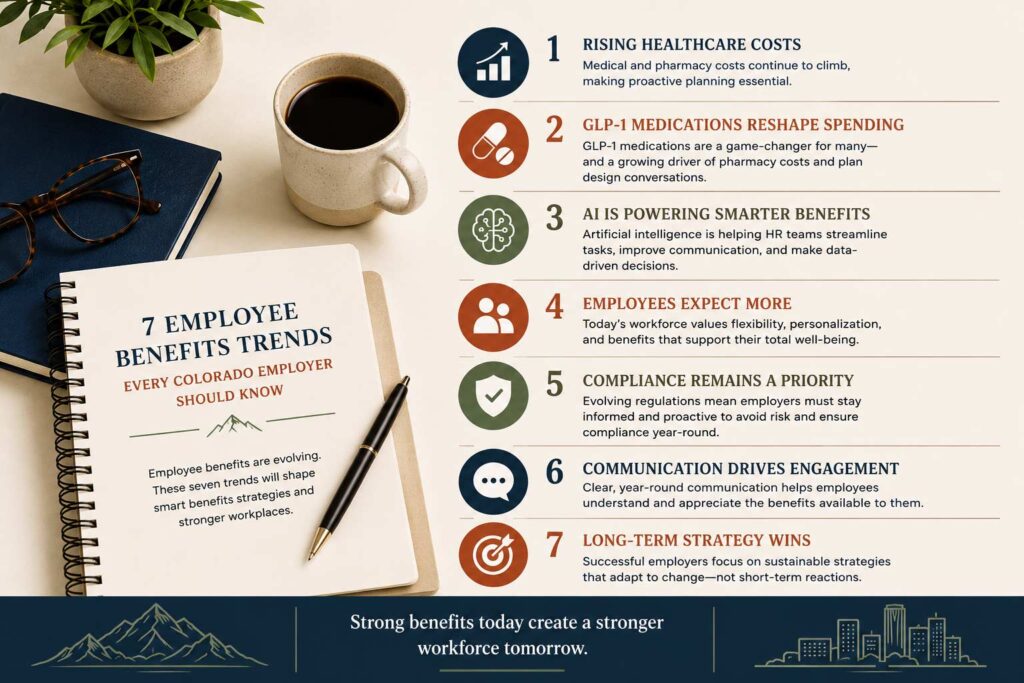
As we work with Colorado employers, these are the seven trends we’re watching most closely in 2026.
At a Glance
- 📈 Healthcare costs continue to rise.
- 💊 GLP-1 medications are reshaping pharmacy spending.
- 🤖 Artificial intelligence is changing how HR teams work.
- 👥 Employees expect more personalized benefits.
- ⚖️ Compliance continues to evolve.
- 💬 Communication has become a competitive advantage.
- 🎯 Long-term strategy matters more than following trends.
📈 1. Healthcare Costs Still Lead the Conversation
If there’s one challenge that’s affecting nearly every employer, it’s the rising cost of healthcare. Medical claims continue to increase, specialty prescription drugs remain expensive, and many employers are preparing for another year of difficult renewals. Whether you have 20 employees or 500, those costs can have a significant impact on your budget.
The good news is employers have more options than they did just a few years ago. Instead of simply accepting renewal increases, many Colorado businesses are taking a closer look at their overall benefits strategy. They’re reviewing pharmacy benefits, analyzing claims data, evaluating plan designs, and exploring funding arrangements that better fit their organization’s goals.
The objective isn’t simply to spend less. It’s to spend smarter while continuing to offer benefits that employees value.
What this means for employers
Don’t wait until a month before renewal to start thinking about your health plan. Reviewing claims trends, utilization, and plan performance throughout the year often leads to better decisions and fewer surprises.
Conexus Perspective
The goal isn’t finding the cheapest health plan. It’s building a benefits strategy that’s sustainable for your business while continuing to provide meaningful coverage for your employees.
💊 2. GLP-1 Medications Are Changing Benefits Strategy
Few topics have generated more discussion over the past two years than GLP-1 medications. Drugs such as Ozempic®, Wegovy®, Zepbound®, and Mounjaro® have changed treatment options for many people living with diabetes and obesity. They’ve also become one of the fastest-growing contributors to pharmacy spending for employer-sponsored health plans.
Because of that, employers are asking different questions than they were even a year ago. Instead of simply deciding whether these medications should be covered, they’re evaluating who should qualify, what clinical guidelines make sense, and how these costs fit into their long-term benefits strategy.
There isn’t a one-size-fits-all answer. Every employer has different goals, different budgets, and a different workforce. The key is making informed decisions based on your organization rather than reacting to headlines.
🤖 3. Technology Is Changing the Way Benefits Are Managed
Artificial intelligence has quickly become part of everyday business operations, and employee benefits are no exception.
Many employers are already using AI to draft employee communications, answer routine benefits questions, summarize information, and reduce administrative work. Those efficiencies allow HR professionals to spend more time supporting employees and less time handling repetitive tasks.
Technology will continue to improve, but it isn’t replacing experienced advisors. Benefits planning still requires judgment, compliance expertise, and an understanding of your organization’s unique goals. The businesses seeing the greatest value from AI are using it to support people—not replace them.
👥 4. Employees Are Looking at the Entire Benefits Package
Competitive pay will always be important, but it’s no longer the only factor employees consider when deciding where they want to work.
Today’s workforce is paying closer attention to the entire employee experience. Health insurance still matters, but employees are also evaluating retirement plans, paid leave, mental health resources, financial wellness programs, voluntary benefits, and workplace flexibility where it makes sense.
That doesn’t mean every employer needs to add more benefits every year. In many cases, it’s about understanding what your employees value most and building a benefits package that reflects those priorities. The strongest programs aren’t necessarily the most expensive. They’re the ones that fit the needs of the people they serve.
Ask Yourself
- Do our benefits reflect what today’s employees value?
- Are we offering benefits employees actually use?
- Could we improve the employee experience without significantly increasing costs?
⚖️ 5. Compliance Isn't Getting Any Simpler
Managing employee benefits has never been just about choosing the right health plan.
Colorado employers continue to balance federal regulations with state-specific requirements while keeping employee notices, reporting obligations, plan documents, and administrative processes current. As regulations continue to evolve, compliance requires ongoing attention throughout the year.
A proactive approach almost always beats a reactive one. Regular reviews of your benefits program can help identify potential issues before they become larger problems and provide greater confidence that your organization is meeting its responsibilities.
What this means for employers
Compliance isn’t something to think about only during open enrollment or renewal season. Building regular compliance check-ins into your annual planning process can save time, reduce stress, and help avoid costly mistakes.
💬 6. Better Communication Creates Better Benefits
One of the biggest opportunities for many employers isn’t adding another benefit. It’s helping employees better understand the benefits they already have.
It’s surprisingly common for employees to overlook valuable resources because they don’t realize they’re available. Whether it’s an employee assistance program, disability insurance, telehealth services, wellness programs, or voluntary benefits, those resources only provide value if employees know they exist and understand how to use them.
That’s why more employers are investing in year-round communication instead of relying solely on open enrollment meetings. Regular reminders, educational resources, and clear communication throughout the year help employees make more informed decisions and better appreciate the investment their employer is making in their benefits package.
Conexus Perspective
Sometimes the biggest improvement you can make to your benefits program isn’t changing the benefits themselves. It’s improving how you communicate them.
🎯 7. Long-Term Strategy Is Winning Over Short-Term Thinking
The most successful employers aren’t chasing every new trend. Instead, they’re building benefits strategies that support their business today while remaining flexible enough to adapt tomorrow. They review their plans regularly, listen to employee feedback, monitor costs throughout the year, and make thoughtful adjustments instead of reacting to every industry headline.
Employee benefits should evolve as your workforce evolves. A strategy that worked five years ago may not be the right strategy today, and that’s okay. The key is reviewing your
The Bottom Line
Employee benefits will continue to evolve, but the fundamentals haven’t changed.
Employers still want to attract and retain talented people. Employees still want benefits that provide meaningful value and financial security. The challenge is finding solutions that balance employee expectations, rising healthcare costs, compliance requirements, and responsible business decisions.
The organizations that succeed won’t necessarily be the ones offering the most benefits or adopting every new trend. They’ll be the ones making thoughtful decisions, communicating those benefits well, and reviewing their strategy regularly.
If it’s been a while since you’ve taken a fresh look at your employee benefits program, now is a great time to start the conversation. A proactive review today can help position your business for a stronger renewal and a more competitive benefits program tomorrow.
Ready for a Fresh Perspective?
At Conexus, we help Colorado employers build employee benefits strategies that balance cost, compliance, and employee experience. Whether you’re preparing for your next renewal, evaluating plan performance, or simply wondering if your current strategy is keeping pace with today’s workforce, we’re here to help.
Let’s have a conversation about where your benefits program is today and where it needs to go tomorrow.