
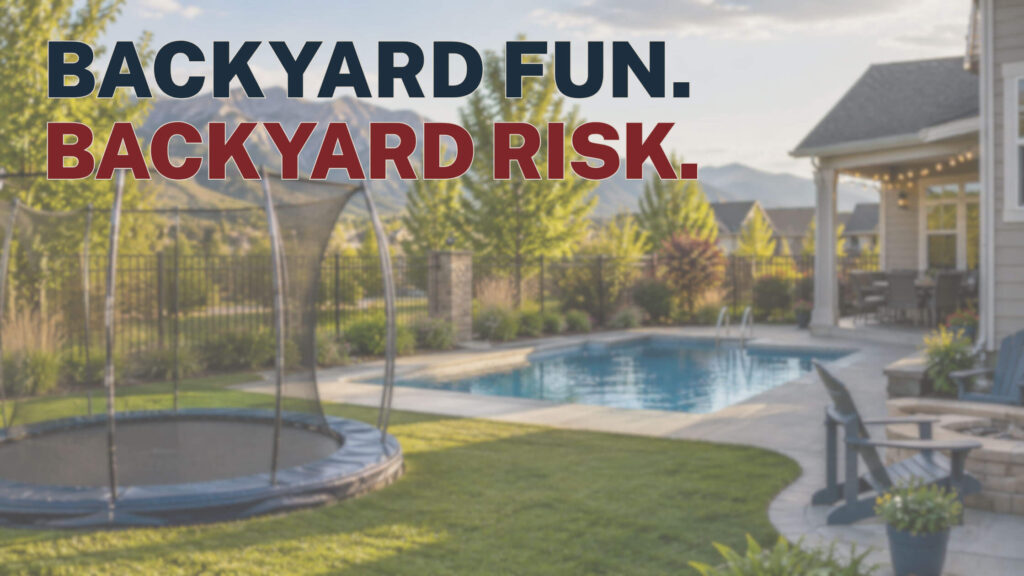
A backyard is often where some of life’s best memories are made. Summer barbecues, birthday parties, neighborhood get-togethers, and afternoons spent outside with family all happen in the backyard.
Many homeowners add features like trampolines, swimming pools, playsets, or fire pits to make those moments even more enjoyable. While these additions can create years of fun, they can also increase your liability exposure. Understanding how they may affect your homeowners insurance before an accident happens can help you avoid surprises later.
Why Backyard Features Matter to Your Insurance
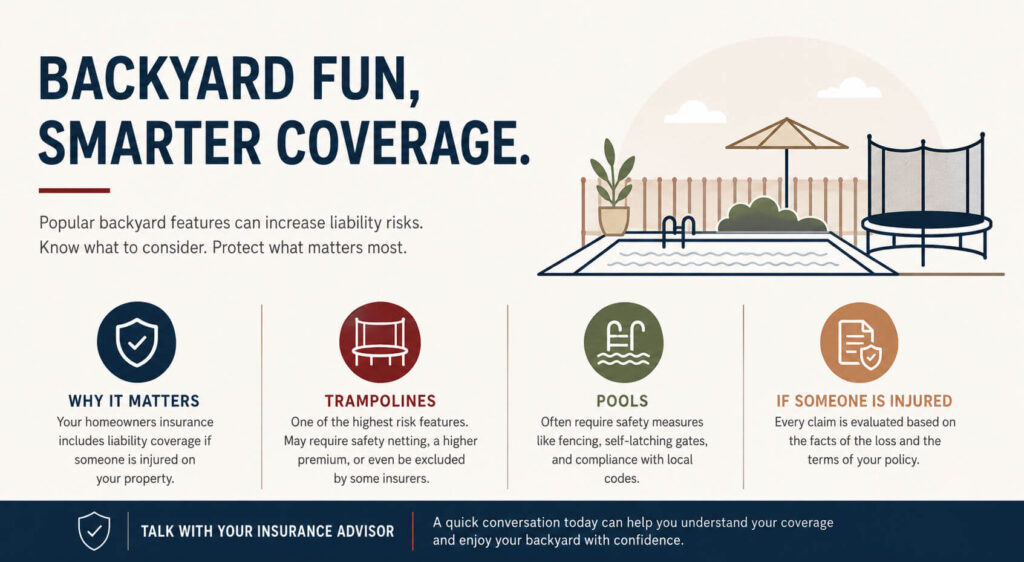
Your homeowners insurance does more than protect your home and belongings. It also includes personal liability coverage, which may help protect you financially if someone is injured on your property and you are found legally responsible.
Some backyard features create a greater chance of injury than others. Because of that, insurance companies often have specific underwriting guidelines or safety requirements for certain recreational equipment.
Common backyard features that may affect your insurance include:
- Swimming pools
- Trampolines
- Hot tubs
- Treehouses
- Swing sets and playground equipment
- Fire pits
- Sports courts
Adding one of these features does not automatically mean your insurance premium will increase or that coverage will change. Every insurance company has its own underwriting guidelines, which is why it’s important to review your plans with your insurance advisor before making a significant addition to your property.
Trampolines Can Present Unique Liability Concerns
A trampoline can provide hours of entertainment for kids and adults alike, but it is also one of the backyard features that insurance companies evaluate most carefully.
Falls, collisions, and improper landings can result in injuries, even when children are supervised and safety nets are installed. Because of the increased risk, insurance companies do not all treat trampolines the same way.
Depending on the insurance carrier, a trampoline may:
- Be permitted without additional requirements
- Require safety netting or other protective features
- Result in a higher premium
- Be excluded from liability coverage
- Make the home ineligible for coverage with that carrier
If you’re thinking about purchasing a trampoline, talk with your insurance advisor first. A quick conversation can help you understand how your insurance company handles trampolines and whether any requirements apply.
Swimming Pools Come With Additional Responsibilities
A swimming pool can be a great investment for your family, but it also creates additional responsibilities as a homeowner.
Pools are often considered an attractive nuisance because they can draw the attention of children who may not fully understand the risks. For that reason, insurance companies and local municipalities often require homeowners to take reasonable safety precautions.
These precautions may include:
- A fully enclosed fence
- Self-closing and self-latching gates
- Safety covers
- Locked access when the pool is not in use
- Compliance with local building and safety codes
Requirements vary by municipality and insurance carrier, so homeowners should confirm what is required before construction begins.
Other Backyard Features Can Increase Liability Exposure
Pools and trampolines receive the most attention, but they are not the only backyard features worth discussing with your insurance advisor.
Hot tubs can create slip hazards and require additional supervision around children. Treehouses and elevated play structures should be inspected regularly to ensure they remain safe and structurally sound. Fire pits should always be used responsibly and positioned away from structures and combustible materials.
Even basketball hoops, playground equipment, and outdoor sports courts can increase the chance of someone being injured on your property. Regular maintenance and routine safety inspections can help reduce those risks.
What Happens If Someone Is Injured?
Many homeowners assume that any injury on their property is automatically covered by their homeowners insurance. In reality, every claim is evaluated based on the facts of the loss and the specific terms, conditions, exclusions, and limits of the policy.
If a guest is injured on your property and you are found legally responsible, your personal liability coverage may help pay covered damages up to your policy limits. Most homeowners policies also include Medical Payments to Others coverage, which may help pay certain medical expenses for a guest who is injured on your property, regardless of fault, subject to the policy’s terms and limits.
Because every situation is different, it’s important to understand what your policy does and does not cover before an accident occurs.
Is an Umbrella Policy Worth Considering?
If you have a swimming pool, trampoline, or regularly entertain guests at your home, it may be worth discussing a personal umbrella policy with your insurance advisor.
An umbrella policy generally provides additional liability protection above the limits of your homeowners and auto insurance policies, subject to the terms and conditions of the policy. For homeowners with significant assets or higher liability exposures, an umbrella policy can provide an extra layer of financial protection.
This is also a good opportunity to review your current liability limits. Many homeowners are surprised to learn that increasing liability coverage or adding an umbrella policy can be more affordable than they expected.
Ways to Help Reduce Backyard Liability Risks
No backyard can be completely risk free, but there are practical steps homeowners can take to help make their property safer for family and guests.
Consider these best practices:
- Inspect playground equipment regularly.
- Repair broken or worn equipment promptly.
- Install and maintain fencing around swimming pools.
- Follow the manufacturer’s safety recommendations for trampolines and playsets.
- Remove ladders from above-ground pools when they are not in use, if applicable.
- Supervise children whenever they are using recreational equipment or swimming.
- Keep walkways clear of trip hazards.
- Review your homeowners insurance whenever you make significant improvements to your property.
Taking a proactive approach to safety can help reduce the likelihood of injuries while giving you greater confidence when family and friends gather at your home.
Review Your Coverage Before You Make Changes
Before installing a pool, trampoline, or other major backyard feature, it’s a good idea to review your homeowners insurance with your advisor.
Questions worth asking include:
- Does my insurance company allow this feature?
- Are there safety requirements I need to meet?
- Will this affect my homeowners insurance premium?
- Do I have enough personal liability coverage?
- Should I consider adding a personal umbrella policy?
Having these conversations before you begin your project can help prevent unexpected issues with your insurance coverage.
Protect Your Home and Your Peace of Mind
Your homeowners insurance should evolve as your home changes. If you’ve recently added a pool, trampoline, hot tub, or other backyard feature, now is a good time to review your coverage and make sure it still meets your needs.
At Conexus, we help Colorado homeowners understand how changes to their home and lifestyle may affect their insurance. Our goal is to provide practical guidance, explain your options clearly, and help you make informed decisions about protecting what matters most.
If it’s been a while since you’ve reviewed your homeowners insurance, we’d be happy to help you evaluate your coverage and answer your questions.
Ready for a homeowners insurance review? Contact the Conexus Personal Insurance team to make sure your coverage keeps up with the way you live.
Frequently Asked Questions
Does homeowners insurance cover trampoline injuries?
It depends on your insurance company and the details of the claim. Some carriers allow trampolines with certain safety requirements, while others may exclude trampoline-related claims or choose not to insure homes with trampolines. Always check with your insurance advisor before purchasing one.
Will adding a swimming pool affect my homeowners insurance?
It may. A swimming pool can increase your liability exposure and may require additional safety features or affect your premium. Requirements vary by insurance company and local regulations.
What is personal liability coverage?
Personal liability coverage is part of most homeowners insurance policies. It may help cover legal expenses or damages if you are found legally responsible for bodily injury or property damage to someone else, subject to your policy’s terms, conditions, exclusions, and limits.
Should I purchase a personal umbrella policy?
A personal umbrella policy may be worth considering if you have higher liability exposures, such as a swimming pool or trampoline, or if you have significant assets you want to help protect. Your insurance advisor can help you determine whether additional liability coverage makes sense for your situation.