
Fall in Colorado can be unpredictable. One day you’re enjoying sunshine and 70-degree temperatures, and a few days later you’re scraping ice off the windshield and wondering why you didn’t clean the gutters when you had the chance.
Before the first real freeze—or the first heavy snowstorm—October is a great time to give your home a little attention.
Winter weather can bring frozen pipes, roof damage, fallen tree limbs, ice, water damage and other costly problems. While homeowners insurance may provide coverage for certain types of sudden and accidental winter damage, your policy isn’t a substitute for regular home maintenance.
A little preparation now can go a long way toward protecting your home this winter.
Here’s a good place to start.
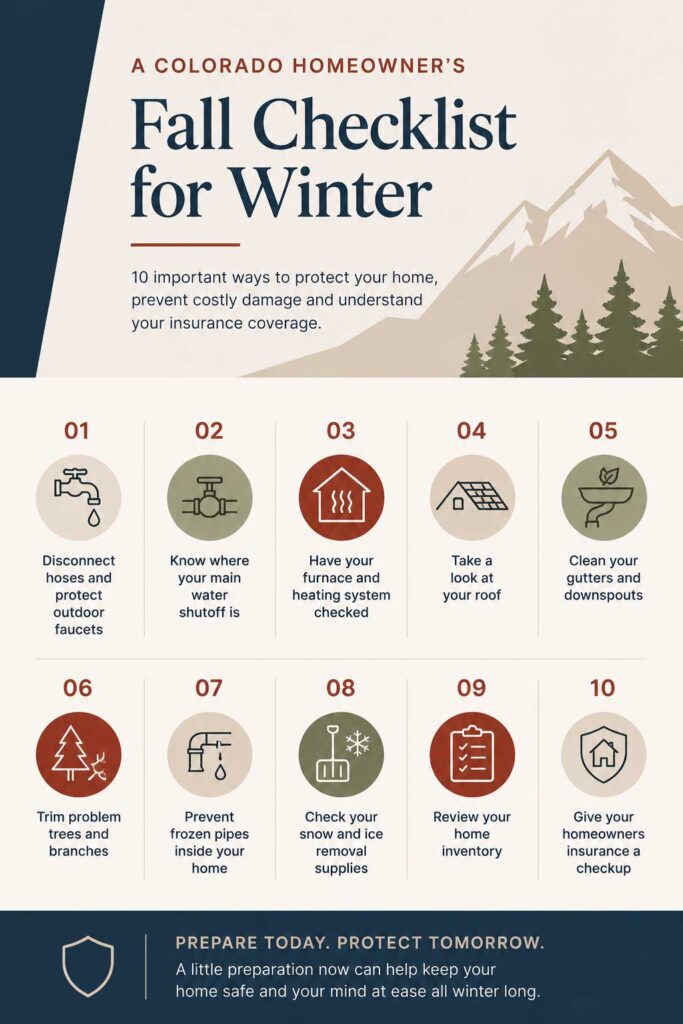
1. Disconnect Your Hoses and Protect Outdoor Faucets
This one is simple, but it’s easy to forget.
Before temperatures consistently dip below freezing, disconnect garden hoses, drain them and store them for the winter. If your home has exterior shutoff valves, follow the appropriate winterization steps for your plumbing system.
Why does it matter? Water left inside a hose or outdoor plumbing can freeze and expand, potentially damaging pipes or fixtures.
And remember: while a homeowners policy may cover some types of sudden and accidental water damage, coverage can depend on the circumstances, cause of loss, policy language and whether reasonable steps were taken to maintain or protect the property.
Five minutes with the garden hose in October sounds a lot better than dealing with water damage in January.
2. Know Where Your Main Water Shutoff Is
If a pipe bursts, that is not the moment you want to start searching for the main water shutoff.
Make sure everyone in your household who might need to respond to an emergency knows where it is and how to use it.
You may also want to consider a water-leak detection or automatic shutoff system. Depending on your insurance carrier, certain protective devices may even qualify for a discount.
3. Have Your Furnace and Heating System Checked
Colorado winters are not the time to discover your furnace has a problem.
Consider having your heating system inspected and serviced before you really need it. Replace dirty filters and make sure vents and registers aren’t blocked.
If you have a fireplace or wood-burning stove, this is also a good time to have the chimney and related components inspected and cleaned as appropriate.
And while you’re at it, test your smoke alarms and carbon monoxide detectors and replace batteries when needed.
4. Take a Look at Your Roof
5. Clean Your Gutters and Downspouts
Once the leaves have fallen, clear debris from your gutters and make sure downspouts can move water away from your home.
Clogged gutters can contribute to drainage problems and ice buildup during Colorado’s freeze-thaw cycles.
While you’re walking around the house, check that water is draining away from the foundation rather than pooling next to it.
6. Trim Problem Trees and Branches
Heavy, wet Colorado snow can put tremendous weight on tree limbs.
Take a look around your property for dead, damaged or overhanging branches that could fall onto your house, garage, fence, vehicles or other structures.
If a tree needs significant trimming—especially near your home or power lines—leave that job to a professional.
One question we hear frequently is, “Who pays if my tree falls on my neighbor’s house?”
Unfortunately, there isn’t one answer that applies to every situation. Insurance coverage and responsibility can depend on what caused the tree to fall, whether the tree was known to be damaged or hazardous, and the specific circumstances of the loss.
That’s exactly the kind of situation where it’s better to call your insurance agent than rely on something you read online.
7. Prevent Frozen Pipes Inside Your Home
Outdoor faucets aren’t the only plumbing concern.
Pipes in basements, crawl spaces, garages, exterior walls and other poorly insulated areas can be particularly vulnerable when temperatures plunge.
Before winter:
- Insulate vulnerable pipes where appropriate.
- Keep garage doors closed when plumbing is located nearby.
- Maintain adequate heat throughout your home.
- Know which areas of your home tend to get unusually cold.
- If you’ll be away during freezing weather, take appropriate precautions to protect your plumbing.
Insurance policies can contain specific conditions or exclusions related to freezing and vacant or unoccupied homes, so don’t assume every frozen-pipe loss will automatically be covered.
8. Check Your Snow and Ice Removal Supplies
Do you know where your snow shovel is?
More importantly, can you get to it without digging through half the garage during a snowstorm?
Stock up on the supplies you normally use to keep driveways, sidewalks and steps reasonably clear. Check outdoor lighting and repair loose railings or uneven steps before they’re covered with snow.
Homeowners have a responsibility to reasonably maintain their property, and keeping walking surfaces in good condition can help reduce the chance of someone getting hurt.
9. Review Your Home Inventory
If you haven’t created a home inventory—or haven’t updated yours in years—fall is a great time to do it.
It doesn’t need to be complicated.
Walk through your home with your phone and take photos or video of each room. Open closets and cabinets and document major belongings. Keep receipts, appraisals or other documentation for higher-value items when appropriate and store your inventory somewhere you can access it even if your home is damaged.
Pay particular attention to jewelry, artwork, collectibles, firearms, electronics and other valuable property. Homeowners policies may have special limits or restrictions for certain categories of property, and additional coverage may be appropriate.
10. Give Your Homeowners Insurance a Fall Checkup
Your house may have changed since the last time you really looked at your insurance policy.
Did you finish the basement? Remodel the kitchen? Add a deck? Install solar panels? Buy expensive jewelry or artwork? Add a home office? Put in a hot tub? Get a dog? Add a teenage driver to the household?
Those are all good reasons to have a conversation with your insurance agent.
It’s also worth reviewing your dwelling coverage, deductible and important policy features. The amount you could sell your home for and the amount it could cost to rebuild after a major loss are two very different things.
With changing construction and labor costs in Colorado, periodically reviewing your estimated replacement cost is especially important.
One More Thing: Don’t Wait Until a Storm Is Coming
Insurance is designed to protect against unexpected losses—not problems that are already happening or imminent.
Once a major winter storm is approaching, insurance carriers may place temporary restrictions on binding new coverage or making certain coverage changes.
That makes fall a much better time to review your policy than the night before the snow starts falling.
Ready for Winter?
You can’t prevent every frozen pipe, falling branch or Colorado snowstorm. But you can take reasonable steps to protect your home—and make sure you understand your insurance before you need to use it.
At Conexus Insurance, we help Colorado homeowners look beyond the price of a policy and understand the protection behind it. As an independent insurance agency, we work with many insurance carriers and help our clients evaluate coverage based on their homes, families and individual needs.
If it’s been a while since you reviewed your homeowners insurance—or your home has changed since your last review—fall is a great time to connect with your Conexus advisor.
Have questions about your homeowners coverage? Contact the Conexus team to schedule an insurance review before winter arrives.
Insurance coverage varies by carrier and policy. The information above is provided for general educational purposes and is not intended to interpret, alter or replace the terms, conditions, limitations or exclusions of any insurance policy. Please refer to your policy and consult with your insurance professional regarding coverage applicable to your specific situation.