
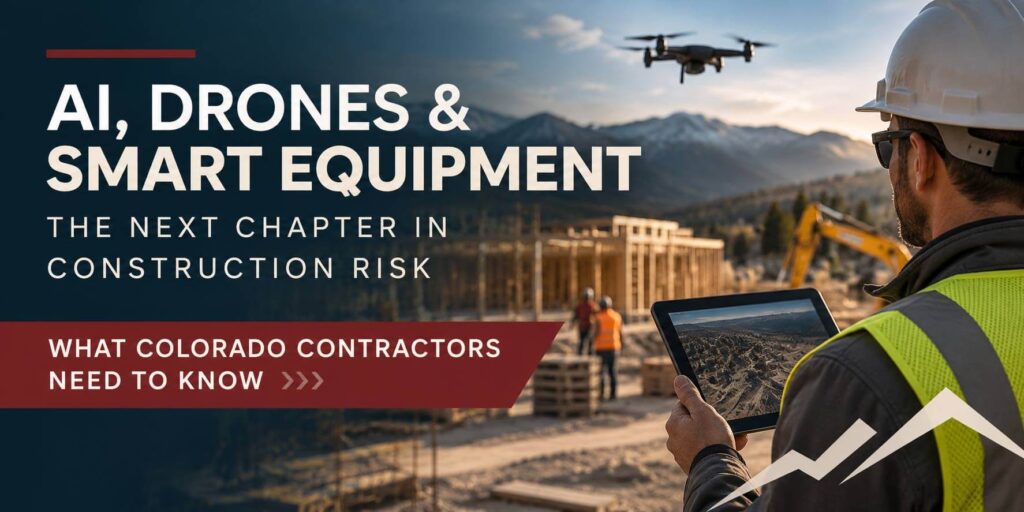
Technology is changing construction. Is your risk management keeping up?
From drones inspecting rooftops to artificial intelligence (AI) helping manage projects, technology is becoming part of everyday operations for Colorado contractors. These tools can improve efficiency, support jobsite safety, and help businesses make better decisions.
But new technology also brings new risks, and insurance coverage doesn’t always evolve at the same pace.
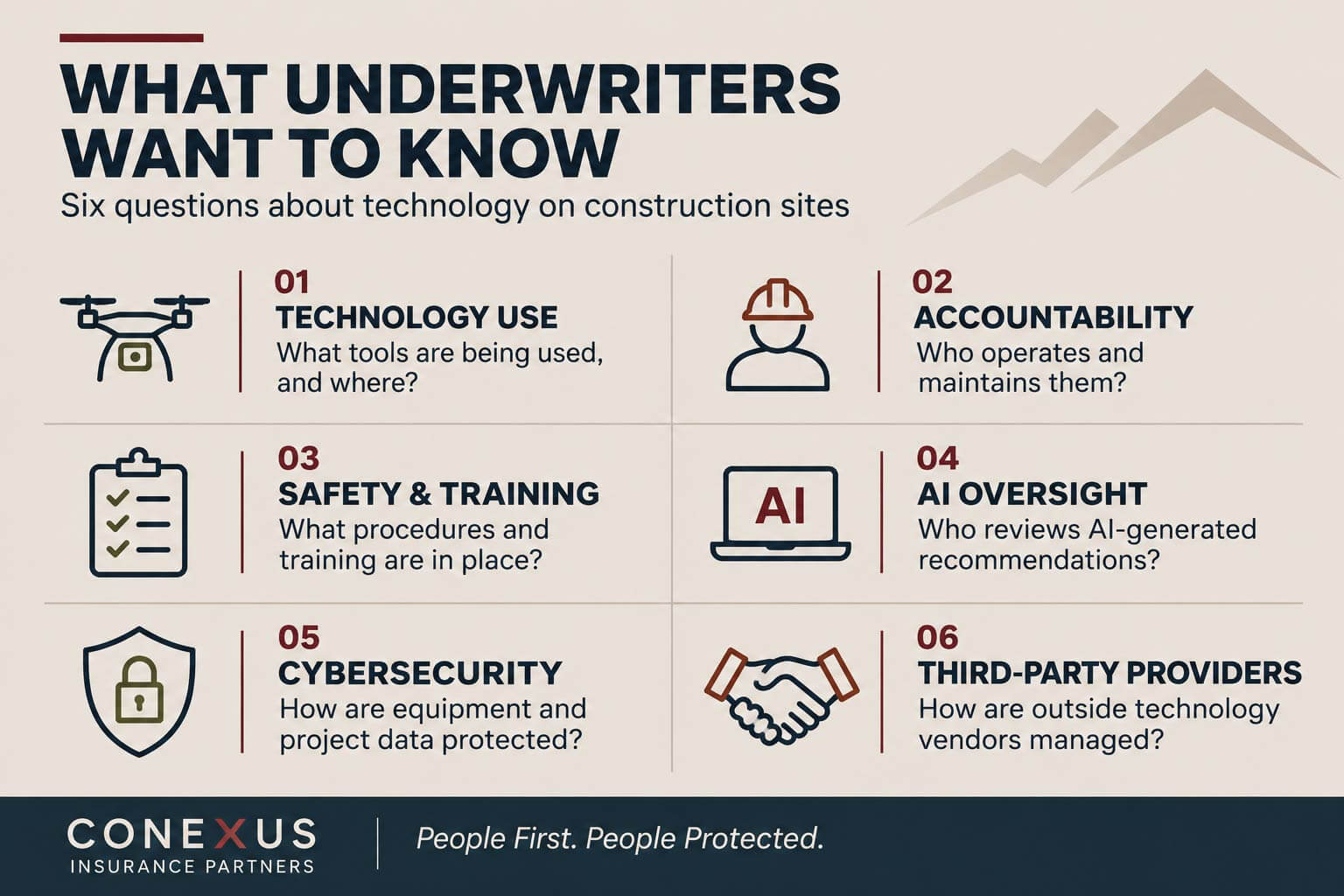
AI: Smarter Tools, New Responsibilities
Contractors are increasingly using AI for estimating, scheduling, project planning, and safety monitoring. While these tools can save time, they’re not foolproof.
An inaccurate AI-generated estimate or overlooked project requirement could lead to costly mistakes, delays, or disputes.
What contractors should consider: Establish procedures for reviewing AI-generated information, especially when it influences financial decisions, safety, or contractual obligations. Technology should support experienced professionals, not replace their judgment.
Drones: A New Perspective on Jobsite Risk
Drones are useful for roof inspections, site surveys, and progress documentation. They can also help reduce the need for workers to access certain hazardous areas.
However, drone operations introduce potential liability exposures involving accidents, property damage, and privacy.
Commercial drone operations are generally subject to FAA Part 107 requirements, and standard general liability policies may exclude aircraft-related exposures.
What contractors should consider: Before operating drones, review applicable FAA requirements and discuss insurance options with your advisor. Don’t assume your existing general liability policy covers drone operations.
Smart Equipment: Connected, but Not Risk-Free
GPS-guided machinery, telematics, and automated equipment are helping Colorado contractors work more precisely and monitor equipment performance.
These advancements can also introduce risks involving software malfunctions, cybersecurity, equipment damage, and higher repair costs.
What contractors should consider: Review equipment values, maintenance procedures, cybersecurity practices, and how your insurance addresses technology-related losses.
How Technology Is Influencing Insurance Underwriting
Insurance carriers evaluate a contractor’s operations, safety practices, equipment, and loss history when determining coverage terms and pricing.
As technology becomes more common, some underwriters may also consider how contractors manage AI, drones, and connected equipment.
Documented training, maintenance, and safety procedures can help demonstrate responsible risk management. However, using advanced technology doesn’t automatically result in lower premiums or broader coverage.
Three Steps Colorado Contractors Can Take
- Review your technology. Identify the AI tools, drones, and connected equipment being used across your operations.
- Establish clear procedures. Document training, oversight, maintenance, and cybersecurity practices.
- Talk with your insurance advisor. Significant changes in equipment, operations, or technology may introduce exposures that warrant an insurance review.
Is Your Insurance Keeping Pace?
Technology will continue to change how Colorado construction businesses operate. Understanding the risks that come with it is just as important as recognizing the opportunities.
At Conexus Insurance, we help Colorado contractors evaluate their exposures, understand their insurance options, and make informed decisions as their businesses evolve.
Introducing new technology to your construction business? Let’s talk about what it could mean for your insurance program.
This article is for general informational purposes only. Insurance coverage varies by policy, insurer, and individual circumstances. All coverage is subject to applicable policy terms, conditions, limitations, and exclusions. Consult your insurance advisor regarding your specific operations and coverage needs.