
How Dash Cams, Telematics & AI Safety Tools Are Changing Fleet Risk in 2026
How Dash Cams, Telematics & AI Safety Tools Are Changing Fleet Risk in 2026
Commercial auto insurance continues to be one of the most challenging insurance markets for Colorado businesses.
Premiums have increased across many industries, underwriting has become more detailed, and insurance carriers are placing greater focus on fleet safety practices during renewals.
At the same time, technology is rapidly changing how businesses manage company vehicles. Dash cams, telematics systems, GPS tracking, driver monitoring, and AI-powered safety tools are becoming more common for businesses with fleets of all sizes.
These tools are helping businesses improve visibility into driver behavior, strengthen safety programs, and better manage operational risk — all while changing how insurance carriers evaluate commercial auto exposures.
Why Commercial Auto Insurance Has Become More Difficult
Several industry trends continue to impact commercial auto insurance pricing and underwriting, including:
- Rising vehicle repair costs
- Increased medical expenses
- Distracted driving accidents
- Larger liability settlements and jury verdicts
- More expensive vehicle technology and parts
- Increased claim severity across the industry
Colorado businesses also face additional challenges tied to hail, winter weather, roadway congestion, and rapid construction growth.
Because of this, insurance carriers are looking more closely at fleet operations and driver management practices than they did just a few years ago.
What Is Fleet Safety Technology?
Fleet safety technology includes systems designed to help businesses monitor vehicles, improve driver accountability, and reduce accidents.
Common examples include:
Dash Cameras
Dash cams can provide additional context during accidents and claims investigations. Many businesses now use forward-facing or dual-facing cameras as part of broader fleet safety programs.
Telematics Systems
Telematics platforms track driving data such as:
- Speed
- Harsh braking
- Rapid acceleration
- Idle time
- GPS location
- Mileage
These systems help businesses identify driving trends and improve operational visibility.
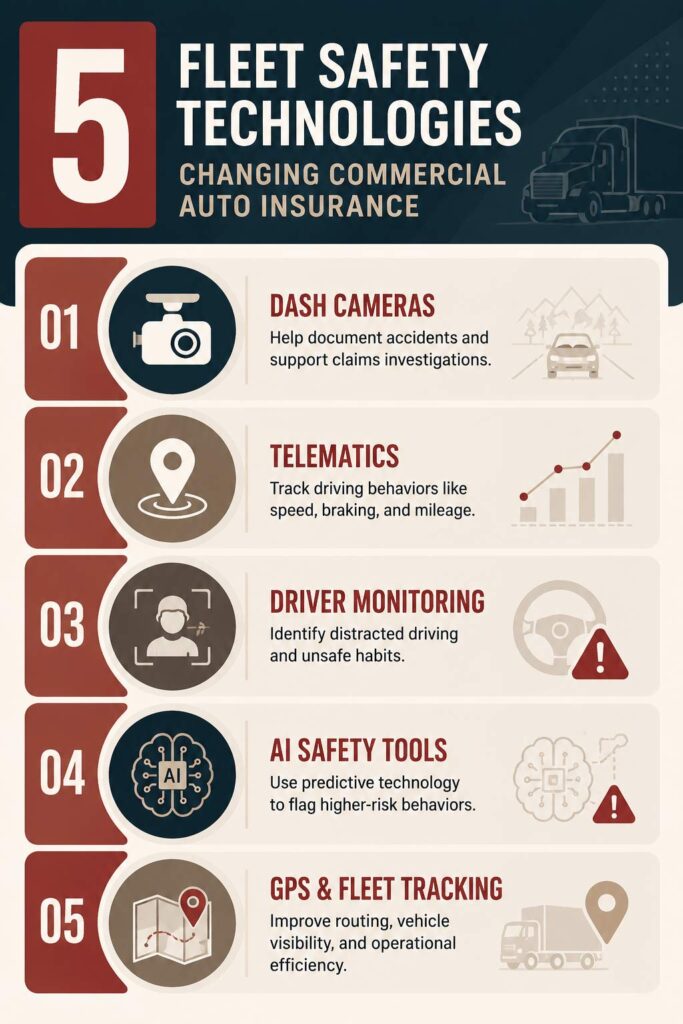
Driver Monitoring Tools
Some platforms use AI-assisted monitoring to detect behaviors such as distracted driving, cell phone use, tailgating, or fatigue indicators.
GPS & Fleet Tracking
Fleet tracking systems can improve routing efficiency, vehicle utilization, and response times during breakdowns or incidents.
How Fleet Technology May Impact Insurance
Many business owners assume installing dash cams or telematics automatically lowers insurance premiums.
Insurance outcomes vary significantly depending on:
- Fleet size
- Industry type
- Vehicle usage
- Driver history
- Loss history
- Carrier appetite
- How the technology is being used internally
Some carriers may view documented fleet safety programs more favorably during underwriting. However, simply installing technology is rarely enough on its own.
Insurance companies are often more interested in whether businesses are actively using the data to:
- Coach drivers
- Address repeat safety concerns
- Maintain written fleet policies
- Improve accountability
- Reduce accident frequency over time
Businesses with strong operational controls may place themselves in a stronger position during renewals than businesses operating without documented safety procedures.
Dash Cam Footage Is Playing a Larger Role in Claims
Video evidence is becoming increasingly common in commercial auto claims.
Dash cam footage may help:
- Clarify accident details
- Reduce fraudulent claims
- Support faster investigations
- Provide additional documentation after an incident
At the same time, businesses should understand that footage can potentially support or complicate claims depending on the circumstances.
It is important for businesses to establish clear policies regarding:
- Video retention
- Driver communication
- Access to footage
- Incident reporting procedures
Businesses should also consult with legal and HR professionals regarding privacy considerations and workplace policies tied to monitoring technology.
What Underwriters Are Looking for in 2026
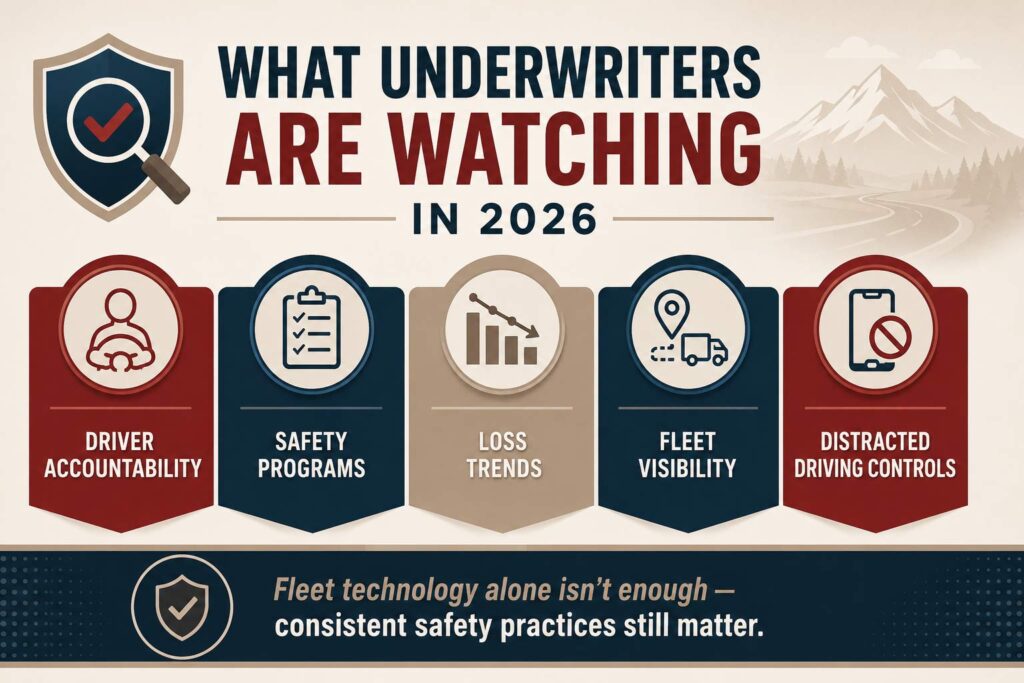
Commercial auto underwriting has become more operationally focused.
In addition to reviewing loss history, carriers may also evaluate:
- Driver hiring standards
- Motor vehicle record (MVR) monitoring
- Distracted driving policies
- Vehicle maintenance procedures
- Driver training programs
- Accident review procedures
- Fleet replacement schedules
- Use of telematics or monitoring systems
These conversations are becoming increasingly common for contractors, trucking companies, service fleets, delivery operations, and businesses with multiple drivers on the road.
Technology Alone Is Not Enough
Fleet safety technology can be a valuable tool, but it does not replace strong management practices.
The most effective fleet safety programs typically combine:
- Clear written policies
- Ongoing driver training
- Consistent accountability
- Regular vehicle maintenance
- Documented safety procedures
- Periodic insurance and risk reviews
Technology works best when it supports a broader culture of safety and operational consistency.
Final Thoughts
Commercial auto insurance is evolving quickly, and fleet safety technology is becoming a larger part of the conversation for Colorado businesses.
While dash cams, telematics, and AI safety tools may help businesses improve visibility and strengthen risk management efforts, every fleet operates differently and insurance results can vary based on operations, claims history, and underwriting factors.
At Conexus Insurance, we work with Colorado businesses to help evaluate fleet exposures, review commercial auto risks, and navigate an increasingly complex insurance market with a practical, advisory-focused approach.
If your business operates company vehicles, this may be a good time to review whether your current fleet safety strategy aligns with today’s insurance environment.
FAQ: Fleet Safety Technology & Commercial Auto Insurance
Do dash cams lower commercial auto insurance premiums?
Not automatically. Some carriers may consider fleet safety technology during underwriting, but pricing depends on many factors including claims history, fleet size, industry, and driver performance.
What is telematics in commercial auto insurance?
Telematics systems collect driving data such as speed, braking, mileage, and GPS information to help businesses monitor fleet activity and improve safety practices.
Are insurance companies requiring telematics?
Not always, but some carriers are placing greater emphasis on fleet visibility and driver management practices during renewals.
What businesses benefit most from fleet safety technology?
Contractors, trucking companies, delivery services, service fleets, and businesses with multiple drivers often benefit from improved visibility and driver accountability tools.
Can fleet safety technology help with claims?
In some situations, dash cam footage and telematics data may help clarify accident details and support claims investigations.