
Moving and storage may look straightforward from the outside — a truck pulls up, belongings are loaded, and everything arrives at a new location or sits in a warehouse until needed again. But underneath the surface, this industry carries unique risks that can quickly become costly without the right insurance protection. From liability exposures and damaged goods to business interruption and regulatory compliance, the moving and storage business needs specialized insurance tailored to its distinct hazards.
Whether you operate a moving company, run a storage facility, or offer ancillary services like packing and logistics, understanding moving and storage insurance is essential to protecting your business, assets, employees, and reputation.
What Is Moving & Storage Insurance?
Moving and storage insurance is a suite of commercial insurance products designed to protect businesses in the relocation, transportation, and warehousing sectors. These policies help transfer financial risk away from the business so an unexpected accident or loss doesn’t disrupt operations or jeopardize solvency.
At Conexus Insurance Partners, we specialize in protecting moving and storage operations through our dedicated Movers Assurance program, designed specifically for the unique risks of transportation, warehousing, and logistics businesses.
Key Types of Coverage for Moving & Storage Operations
Here’s a closer look at the types of insurance most moving and storage businesses typically need:
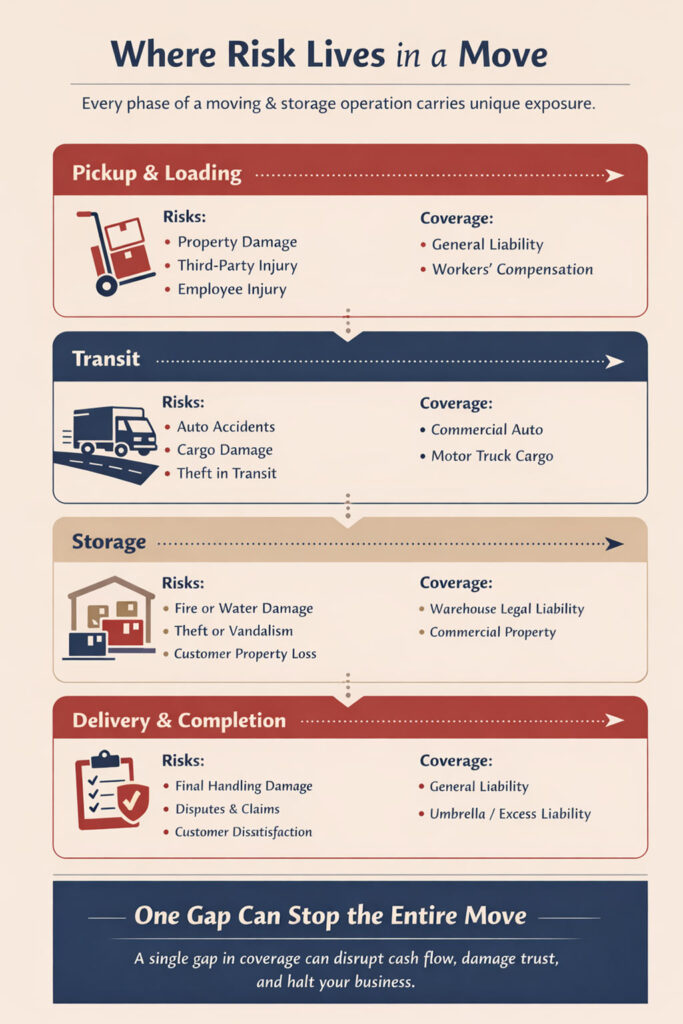
Your fleet — trucks, vans, trailers — is the backbone of your business. Commercial auto insurance protects these vehicles and your drivers if accidents lead to bodily injury, property damage, or physical damage to the vehicles themselves. Most carriers will also include hired and non-owned auto coverage to protect against liability when employees use personal vehicles for business tasks.
📦 Cargo & Warehouse Legal Liability
When you transport or store customer goods, you take on care, custody, and control of those items. Cargo insurance protects customer property while it’s in transit, whereas warehouse legal liability protects goods while they’re in storage under your watch. These coverages are essential because standard commercial property policies generally don’t extend to goods once they leave your premises.
This foundational coverage helps protect against claims of bodily injury or property damage involving third parties. For example, if a customer slips and falls at your warehouse or a contractor’s equipment damages a client’s property during a move, general liability helps cover legal defense and settlement costs.
🏢 Commercial Property Insurance
Protect your facilities, equipment, office contents, and storage units from risks like fire, theft, and severe weather. This is especially important if your business owns warehouses or storage locations filled with valuable customer goods and essential business assets.
Because moving and warehousing involve physically demanding work — from heavy lifting to truck driving and machinery operation — workplace injuries are a significant exposure. Workers’ compensation insurance helps cover medical costs and wage replacement for employees hurt on the job and is required in most states.
📉 Business Interruption Insurance
A fire at your facility, natural disaster, or major equipment breakdown can halt operations. Business interruption insurance helps replace lost income and cover ongoing expenses while you get back on your feet.
🧑💼 Specialized & Supplemental Coverages
Beyond core policies, carriers offer additional options like:
- Commercial crime (to protect against employee theft or fraud)
- Bobtail and non-trucking liability (for idle vehicles)
- Umbrella/excess liability (extra protection above primary limits)
- Cyber liability (for exposure from data breaches and ransomware)
These add layers of protection for evolving risks in a modern moving and storage business.
Why Proper Coverage Is So Important
Moving and storage businesses face a convergence of liability and operational risks:
- Vehicles on busy roads every day face higher collision exposure.
- Goods in transit or storage can be damaged by theft, fire, or weather.
- Employees working with heavy equipment are at greater risk of injury.
- Customer expectations are high when personal possessions are involved.
Without the right insurance, one serious claim — for example, a damaged truck that also destroys customer property — could threaten your business’s financial stability. Specialized moving and storage insurance ensures your business can absorb shocks and continue meeting commitments.
How Conexus Helps You Manage Risk
At Conexus Insurance Partners, we go beyond simply selling policies — we act as your risk management partner. Our Movers Assurance program includes:
- In-depth risk analysis tailored to your business
- Safety program support and premium optimization
- 24/7 certificate issuance
- Compliance assistance for interstate and military hauling
- Custom coverage designs for a broad spectrum of moving and storage operations, including logistics, packing services, record storage, and owner/operators.
Final Thoughts
Whether you’re launching a new moving company, expanding into storage operations, or simply reviewing your existing protection, it’s critical to understand how insurance supports your business resilience. Getting the right mix of coverage allows you to:
✅ compete confidently in a complex industry
✅ protect your assets, employees, and customers
✅ stay compliant with regulations
✅ weather unexpected losses without crippling financial impact
If you’re ready to strengthen your insurance strategy or want a quote tailored to your operation, our team at Conexus is here to help.