
If you’re a Colorado employer reviewing your health insurance renewal for 2027, you’ve likely noticed something familiar: healthcare costs continue to rise, and finding the right balance between managing expenses and taking care of your employees isn’t getting any easier.
For many businesses, employee benefits represent a significant investment. They’re also an important part of attracting, supporting, and retaining good people.
With another year of rising health insurance costs ahead, employers have some important decisions to make. The good news is that there are meaningful steps you can take to evaluate your options and make informed decisions about your benefits program.
What Colorado Employers Can Expect in 2027
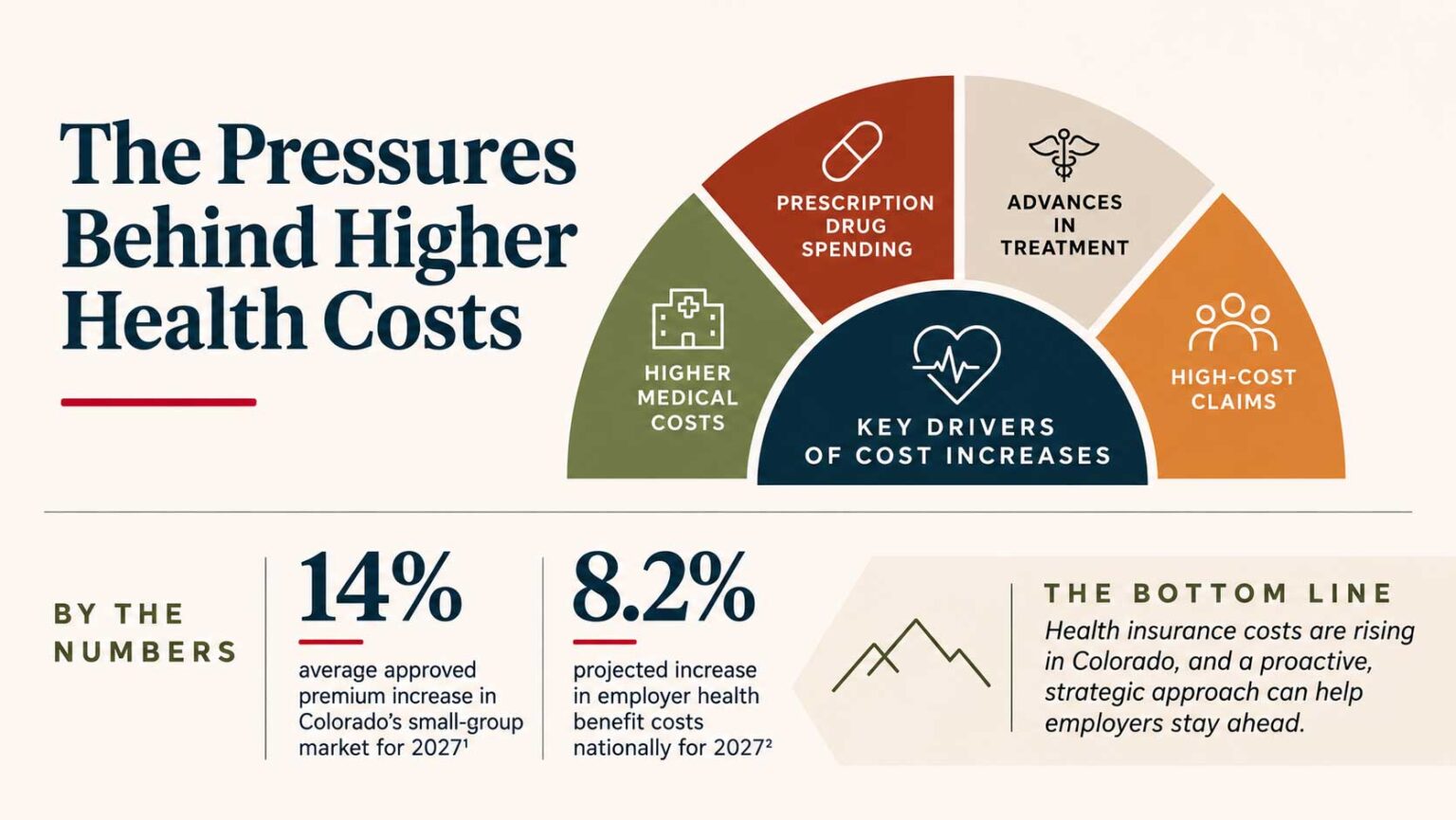
According to the Colorado Division of Insurance, approved health insurance premiums in the state’s small-group market are expected to increase by an average of 14% for 2027.
Nationally, employers are facing similar pressures. Marsh’s 2026 National Survey of Employer-Sponsored Health Plans projects an average 8.2% increase in employer health benefit costs for 2027, even after accounting for planned cost-management measures.
These figures reflect different markets and methodologies, but both point to continued pressure on employer healthcare budgets.
It’s important to remember that these are averages and projections, not the increase every business will experience. Actual renewal costs depend on factors such as the insurance carrier, plan design, geographic rating area, group characteristics, and applicable underwriting and rating requirements.
For Colorado businesses, particularly small and midsize employers, understanding the factors behind their own renewal is an important first step.
Why Are Employer Health Insurance Costs Rising?
There isn’t one simple explanation.
Several factors continue to influence the cost of employer-sponsored health insurance:
- Higher medical costs: The cost of hospital services, physician care, medical procedures, and other healthcare services continues to put pressure on premiums.
- Prescription drug spending: Specialty medications and newer treatments, including certain GLP-1 medications, are contributing to higher healthcare spending.
- Advances in treatment: New therapies and medical technologies can improve patient outcomes, but they may also come with significant costs.
- High-cost claims: Serious illnesses and complex medical conditions can create substantial expenses, particularly for certain funding arrangements.
These pressures affect employers differently depending on their plans and workforce.
While businesses can’t control the broader healthcare market, they can take a closer look at how their benefits dollars are being spent.
Five Ways Colorado Employers Can Approach Rising Health Insurance Costs
1. Start With a Closer Look at Your Current Benefits Program
Before making changes, understand what’s working and what isn’t.
Review your current plan offerings, employee contributions, enrollment patterns, and renewal information. Where appropriate data is available, utilization and claims trends may also provide useful insight.
Consider whether your benefits program still reflects the needs of your employees and the financial priorities of your business.
The goal isn’t simply to find the lowest premium. It’s to understand the value you’re receiving and where adjustments may make sense.
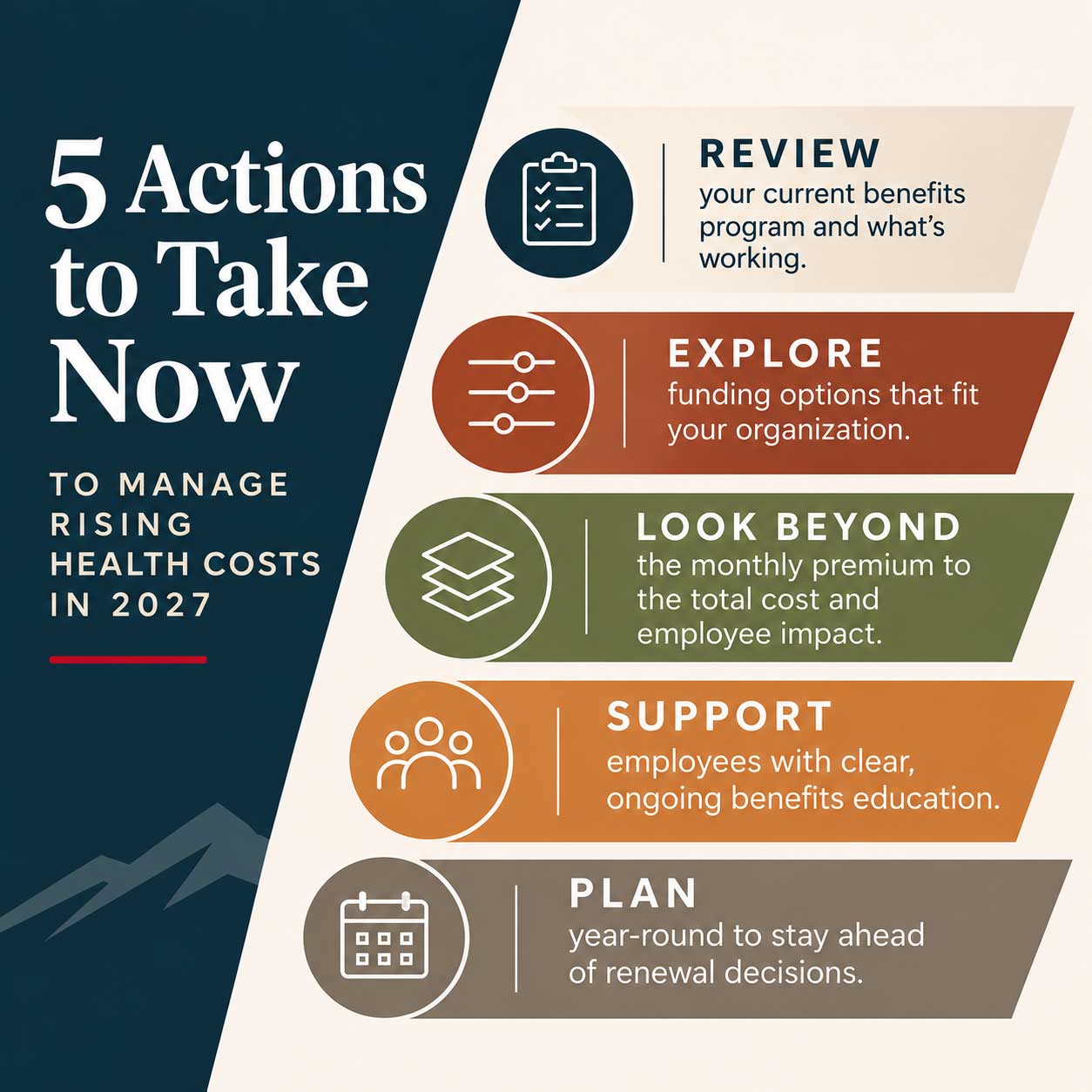
2. Evaluate Your Health Insurance Funding Options
Traditional fully insured health plans are familiar to many employers, but they aren’t the only arrangements available.
Depending on the size and characteristics of your organization, other funding approaches, including level-funded or self-funded plans, may be worth evaluating.
Each comes with different considerations involving cost, cash flow, claims exposure, administration, and financial risk.
An arrangement that works well for one employer may not be appropriate for another. Eligibility, availability, underwriting, contractual terms, and applicable regulatory requirements all matter.
Understanding these differences can help employers determine which options deserve further consideration.
3. Look Beyond the Monthly Premium
A lower premium doesn’t always mean lower overall costs.
Deductibles, copayments, coinsurance, out-of-pocket maximums, provider networks, and prescription drug coverage all affect what employees may pay when they need care.
Changes that reduce an employer’s premium may also increase employees’ out-of-pocket expenses or affect access to preferred providers.
When comparing plans, consider both the employer’s financial commitment and the employee experience.
The right balance will look different for every organization.
4. Help Employees Better Understand Their Benefits
Even a thoughtfully designed benefits program can fall short if employees don’t understand how to use it.
Clear communication during open enrollment is important, but education shouldn’t stop there.
Helping employees understand their plan options, provider networks, prescription drug benefits, and available resources can make it easier for them to make informed healthcare decisions.
It also gives employees a better understanding of the investment their employer is making in their benefits.
Sometimes improving the benefits experience starts with better communication, not additional spending.
5. Make Benefits Planning a Year-Round Conversation
For many employers, benefits planning becomes a priority when renewal approaches.
But waiting until the renewal arrives can limit the time available to evaluate alternatives.
Regular conversations throughout the year create opportunities to review plan performance, discuss workforce needs, monitor market developments, and prepare for upcoming decisions.
Whether your plan renews January 1 or later in the year, a proactive approach can make the renewal process more manageable.
Managing Costs Without Losing Sight of Your People
Rising health insurance costs create difficult choices.
Employers need to manage their budgets, but they also recognize that healthcare coverage plays an important role in their employees’ financial security and well-being.
There’s rarely a single solution that addresses every concern.
For some organizations, the priority may be evaluating alternative plan designs. For others, it may be reviewing funding arrangements, adjusting contribution strategies, or improving benefits education.
What matters is making those decisions with a clear understanding of the financial implications and how changes may affect employees.
A Thoughtful Approach to Employee Benefits in Colorado
At Conexus Insurance, we believe employee benefits should support both your business and the people who make it successful.
Our Employee Benefits team works with Colorado employers to evaluate coverage options, understand costs, and develop benefits strategies that reflect their goals and priorities.
As healthcare costs continue to rise, having the right information and a knowledgeable team to help you evaluate your options matters.
If you’re reviewing your 2027 employee benefits strategy, we’d welcome the opportunity to have a conversation.