

Why These Benefits Continue to Impact Recruitment & Retention
When employers evaluate their employee benefits strategy, most of the attention naturally goes toward medical insurance.
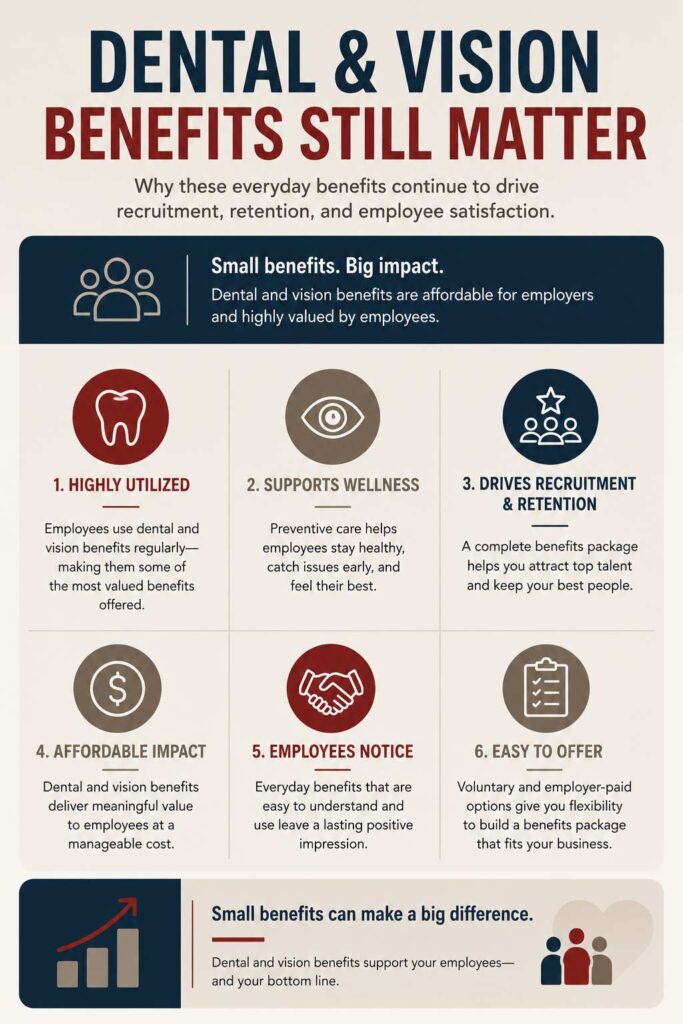
But dental and vision benefits still play a much bigger role in employee satisfaction, recruitment, and retention than many employers realize.
In today’s competitive hiring environment, employees are paying attention to the full benefits package, not just medical coverage alone.
At Conexus Insurance, we continue to see dental and vision benefits remain highly valued because they’re:
- Frequently used
- Easy to understand
- Relatively affordable
- Viewed as meaningful “everyday” benefits
- Connected to preventive care and overall wellness
For many organizations, these benefits may seem secondary on paper, but they can still significantly influence how employees view an employer’s overall benefits package.
Employees Notice the Benefits They Actually Use
Dental and vision plans tend to be some of the most utilized employee benefits.
Unlike some coverages employees may rarely access, many employees and families regularly use:
- Dental cleanings and exams
- Fillings and orthodontics
- Annual eye exams
- Prescription glasses or contact lenses
Because employees interact with these benefits consistently, they often view them as highly valuable, even when employer contributions are modest.
Vision benefits have become especially important as employees spend more time on screens and digital devices throughout the workday.
Small Benefits Can Still Have a Big Impact
One of the biggest misconceptions employers sometimes have is assuming employees only care about major medical coverage.
In reality, employees often evaluate benefits packages as a whole.
Benefits like dental, vision, life insurance, disability coverage, and voluntary benefits can help support:
- Recruitment efforts
- Employee retention
- Workplace morale
- Overall compensation perception
In many cases, employees remember the usability and accessibility of benefits more than the complexity of a medical plan design.
Voluntary Dental & Vision Plans Still Provide Value
Not every employer can fully fund dental and vision coverage, especially as healthcare costs continue to rise.
The good news is that voluntary dental and vision plans can still provide meaningful value while helping employers remain competitive.
Even employee-paid access to group plans may offer:
- Better pricing than many individual plans
- Payroll deduction convenience
- Simplified enrollment
- Broader provider access
For many employers, simply offering access to these benefits can positively impact recruitment and retention conversations.
Benefits Communication Matters
Employees are far more likely to value benefits they understand.
During open enrollment, employers should consider clearly communicating:
- What the plans cover
- Preventive care benefits
- Network information
- Cost-sharing expectations
- How employees can maximize their coverage
Simple, easy-to-understand communication often improves employee appreciation and engagement with benefits programs.
What Employers Should Review
As employers evaluate their benefits strategy, it may be worth reviewing:
- Employee participation levels
- Recruitment feedback from candidates
- Retention trends
- Employer contribution strategies
- Voluntary benefit opportunities
- Overall benefits competitiveness
Dental and vision benefits may not always be the most expensive part of a benefits package, but they often remain some of the most visible and appreciated.
Benefits Still Shape Employee Perception
In today’s hiring environment, employees are evaluating more than salary alone.
Benefits continue to influence how employees view an employer’s culture, support, and overall investment in their workforce.
Dental and vision coverage may seem like smaller pieces of a benefits package, but they still matter, and in many organizations, they matter more than employers think.
At Conexus Insurance, we help employers evaluate employee benefits strategies that support recruitment, retention, employee experience, and long-term business goals.
Disclaimer
This article is intended for general informational purposes only and should not be interpreted as legal, tax, HR, or employee benefits compliance advice. Benefits offerings, plan structures, and employer obligations may vary based on group size, carrier requirements, funding structure, and applicable regulations. Employers should consult with qualified benefits, legal, or HR professionals regarding their specific situation.