
The Fourth Quarter Squeeze
For many employers, fourth quarter means renewal season — and another round of sticker shock when reviewing employee benefits costs. According to the 2025 KFF Employer Health Benefits Survey, the average annual premium for employer-sponsored family coverage rose to $26,993, a 6% increase over last year. Employers cite higher medical inflation, prescription costs, and increased utilization of care as key drivers.
At the same time, workforce expectations are evolving. Employees want comprehensive benefits — mental health support, flexible options, family-building resources — but budgets are under more pressure than ever.
The good news? Innovative employers are responding with smarter, more strategic approaches.
Why Costs Are Rising
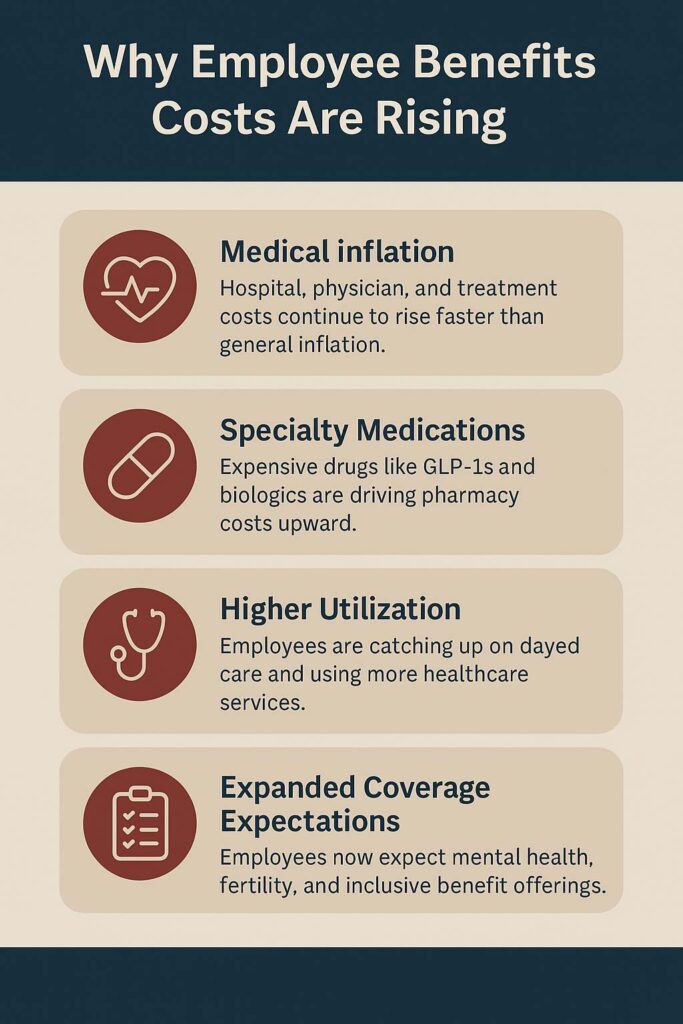
Before tackling solutions, it helps to understand the key trends behind the increase:
- Medical inflation:
Hospital, physician, and drug costs continue to rise faster than general inflation. - Specialty medications:
GLP-1 weight-loss drugs and other specialty therapies are significantly impacting pharmacy spend. - Higher utilization:
Employees are catching up on deferred care from the pandemic years. - Expanded coverage expectations:
Mental health, fertility, and family-care benefits are now seen as must-have offerings. - Aging workforce:
Older employees tend to require more healthcare services, impacting overall plan costs.
How Employers Are Getting Creative
1. Smarter Plan Design
Rather than simply raising deductibles, many companies are restructuring plans around value-based design — encouraging use of high-quality, cost-efficient providers and rewarding preventive care. Tiered networks and direct-contracting models are becoming more common.
2. Data-Driven Decisions
Employers are leveraging claims data and analytics to pinpoint where spending occurs and identify opportunities to reduce waste. Insights from transparency tools help HR teams negotiate better rates and educate employees on lower-cost care options.
3. Alternative Funding Models
Captive arrangements, level-funded plans, and self-insurance are gaining traction among mid-sized employers seeking more control and potential cost savings. These models come with additional fiduciary and compliance responsibilities but can offer long-term financial stability when managed well.
4. Emphasis on Prevention and Well-Being
Organizations investing in wellness programs, chronic-condition management, and behavioral health support are seeing measurable ROI. Encouraging preventive care not only improves employee health outcomes but also helps reduce long-term claims.
5. Voluntary and Lifestyle Benefits<
Adding voluntary benefits — such as pet insurance, identity theft protection, or student-loan assistance — enhances total compensation value without significantly increasing employer cost. Employees appreciate flexibility and personalization.
6. Better Communication and Engagement
Even the best plan design fails without engagement. Employers are rethinking open enrollment with interactive tools, short videos, and simplified comparison charts that empower employees to make informed choices. The result: higher satisfaction and fewer surprises at renewal.
Balancing Cost, Culture, and Compliance
Reducing benefit costs shouldn’t mean reducing employee trust. Clear communication about why changes are being made — and how they support long-term stability — is essential. Employers should also document decision-making processes, ensure compliance with ERISA and ACA affordability standards, and review all plan communications for accuracy.
Working with a trusted benefits advisor or risk management partner can help ensure cost-containment strategies align with organizational goals while minimizing exposure to Employee Benefits Liability (EBL) risks from administrative errors or plan miscommunications. Transparency
The Bottom Line
Rising benefits costs are here to stay — but employers don’t have to absorb them passively. By combining smarter design, data insights, and creative funding approaches, organizations can control expenses without compromising the employee experience.
Investing in prevention, communication, and flexibility today can help create a sustainable benefits program that supports both people and profitability tomorrow.