

Understand how these two coverages work together to protect your vehicle in Colorado.
When reviewing your auto insurance policy, you’ve probably come across the terms comprehensive and collision coverage. While they’re often bundled together as part of your car insurance, they protect your vehicle in very different scenarios—and deciding whether to carry one, both, or neither depends on your car, your finances, and the risks you face on the road.
Let’s walk through what each type of auto insurance coverage does, how they work in Colorado, and how to decide what’s right for your situation.
🚗 What Is Collision Coverage?
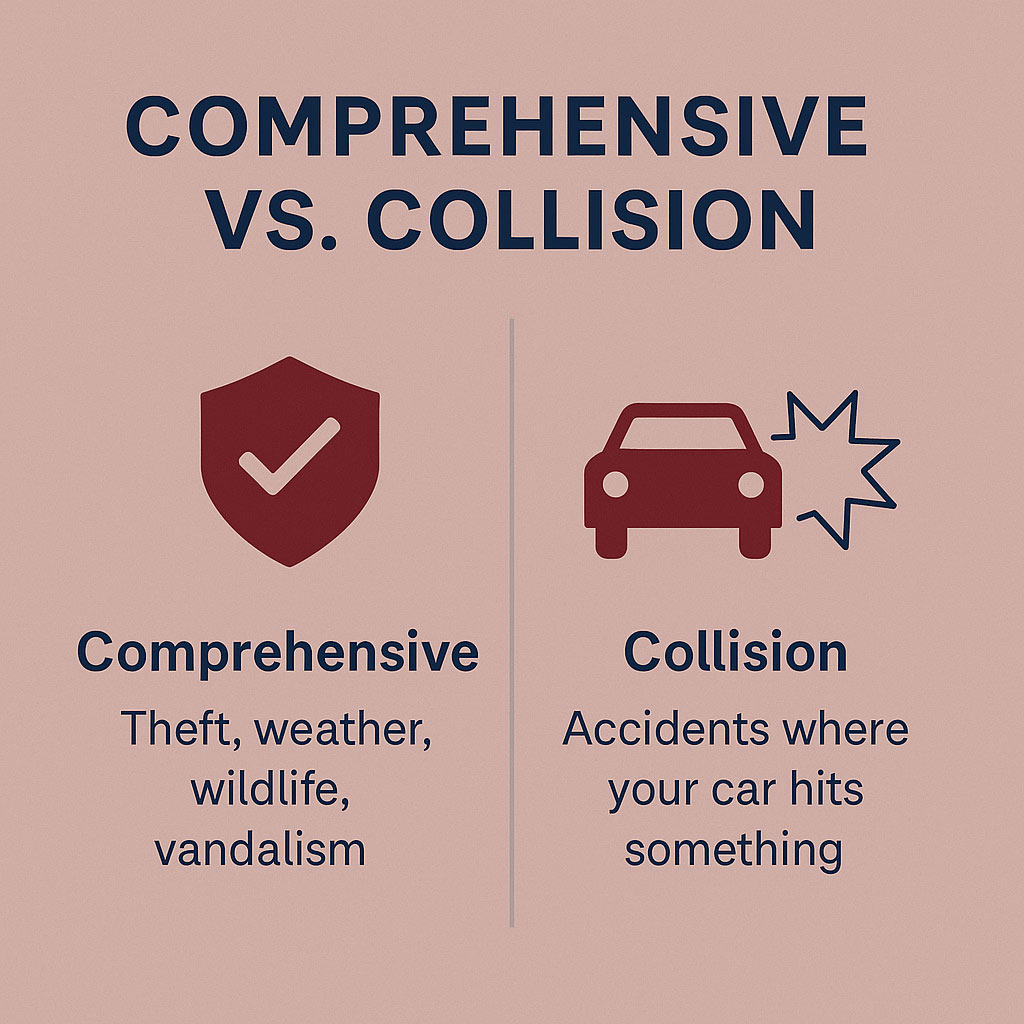
Collision coverage helps repair or replace your vehicle if it’s damaged in an accident involving a collision—whether with another car, an object, or even a rollover.
This includes:
- Hitting another vehicle (or being hit by one)
- Crashing into a tree, fence, or pole
- Damage from a single-vehicle accident (like sliding on ice)
- Rollovers
Example: You back into a concrete post in a parking garage. Collision coverage helps cover your repair costs, minus your deductible.
🌪️What Is Comprehensive Coverage?
Comprehensive coverage pays for damage to your vehicle from non-collision incidents—often things that are out of your control.
Common examples include:
- Hail and severe weather (especially common in Colorado)
- Theft or vandalism
- Fire or flood
- Falling objects (like tree branches)
- Wildlife collisions (like deer or elk)
- Broken glass or windshield damage
Example: A hailstorm dents your roof and smashes your windshield. Comprehensive coverage helps cover the repair bill.
✅ Do You Need Both?
It depends on the value of your vehicle, your financial situation, and whether you’re still making payments on the car.
| Coverage | When It’s Useful |
| Collision | Newer vehicles, vehicles you’re still paying off, or if you’d struggle to cover repairs after an accident. |
| Comprehensive | Especially helpful in Colorado’s hail-heavy, wildlife-rich, unpredictable climate—even for older vehicles. |
Many people choose both coverages because they work together to protect your vehicle from a wide range of damage—regardless of fault.
💡 Colorado law does not require either comprehensive or collision coverage. However, your lender or leasing company likely will if your vehicle is financed.
Should You Carry These Coverages on an Older Car?
As your car’s market value goes down, you may consider dropping one or both coverages to save on your car insurance premium. A good benchmark:
If your annual cost for comp + collision is more than 10% of your vehicle’s current value, it may be time to reassess.
That said, comprehensive coverage is often still valuable in Colorado—hailstorms, theft, and wildlife damage can affect even older or parked vehicles.
📍 Local Insight for Colorado Drivers
Colorado ranks among the top 5 states for hail damage and is no stranger to wildlife-related auto insurance claims—especially along foothills and rural highways. Even in metro areas like Denver, Broomfield, and Westminster, we regularly see weather-related claims and cracked windshields.
Because of this, comprehensive coverage is a smart choice for most Colorado drivers—regardless of your vehicle’s age.
The Conexus Perspective
Insurance shouldn’t feel confusing or one-size-fits-all. At Conexus, we take the time to explain what matters, so you’re never left guessing about your auto insurance coverage. Whether you’re reviewing your policy, renewing, or considering changes based on your vehicle’s age or value, we’re here to help you make informed, confident decisions.
Together, we can make sure your car insurance coverage matches how you drive—and how you live.
Quick Recap: What Each Coverage Protects
| Comprehensive | Collision | |
| Covers | Theft, weather, wildlife, vandalism | Accidents where your car hits something |
| Required by law? | ❌ No | ❌ No |
| Required by lender? | ✅ Often if leased/financed | ✅ Often if leased/financed |
| Recommended | ✅ Yes, especially in Colorado | ✅ Yes for newer or higher-value vehicles |
Have questions about your coverage?
Let’s talk through what you have, what you need, and what makes the most sense for your situation. You’ll get honest answers, helpful insights, and a partner who puts your needs first.