
Solar panels and Colorado sunshine are a natural fit. Unfortunately, Colorado sunshine also comes with another familiar weather pattern: hail.
If you’ve added solar panels to your home, you may be wondering what happens when a Colorado hailstorm rolls through. Does homeowners insurance cover hail damage to solar panels?
The answer is: it may.
Coverage depends on your policy, how your solar panels are installed, whether you own or lease them, the cause of the damage, and any applicable exclusions, limits, or deductibles.
Here’s what Colorado homeowners should know before the next storm arrives.
Are Solar Panels Covered by Homeowners Insurance?
In many cases, permanently installed solar panels may be covered by homeowners insurance, but exactly how they’re insured can depend on the installation.
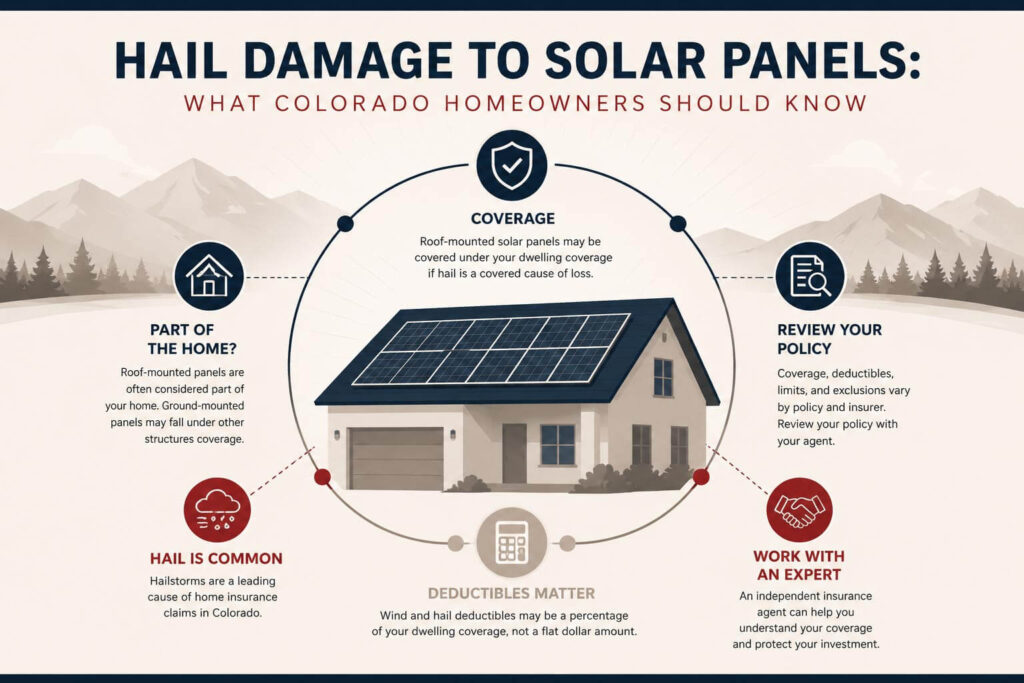
Roof-mounted solar panels may be considered part of the home’s structure and fall under dwelling coverage. That’s the portion of a homeowners policy designed to protect the physical structure of your home against covered causes of loss.
Ground-mounted or detached solar panels may be treated differently. Depending on the policy, they could fall under other structures coverage, which typically has its own coverage limit.
There can also be different insurance considerations if your solar panels are leased rather than owned. A lease or power purchase agreement may place some insurance responsibility with the solar company.
That’s why it’s important to tell your insurance agent about your solar system rather than assuming it’s automatically covered.
Does Homeowners Insurance Cover Hail Damage to Solar Panels in Colorado?
Hail is commonly a covered cause of loss under homeowners insurance, but that doesn’t mean every policy provides the same protection.
If your homeowners policy covers hail damage and your solar panels qualify as covered property under the policy, damage to the panels from a hailstorm may be covered, subject to the terms and conditions of your policy.
For example, imagine a severe storm moves through the Denver metro area and damages both your roof and your roof-mounted solar panels. Depending on your policy, the resulting damage may fall under your dwelling coverage.
But there are several important details to check before assuming you’re covered.
Pay Attention to Your Wind and Hail Deductible
Your standard homeowners deductible isn’t necessarily the deductible that will apply to a Colorado hail claim.
Some homeowners policies have a separate wind and hail deductible, which may be expressed as a percentage of your dwelling coverage rather than as a flat dollar amount.
That distinction matters.
For example, if your home is insured for $600,000 and your policy has a 1% wind and hail deductible, your deductible would be $6,000 for a covered wind or hail claim.
Solar panels can increase the potential cost of repairing your home after a storm, so understanding your deductible before you have a claim is particularly important.
Does Installing Solar Panels Change Your Home Insurance?
It can.
Adding a solar system is a significant improvement to your home. Depending on the system and your insurer, you may need to update your policy or dwelling replacement cost to account for the additional cost associated with the installation.
Don’t wait until after a hailstorm to mention the panels to your insurance company.
Before or shortly after installation, talk with your insurance agent about:
- Whether the solar panels are covered under your existing homeowners policy
- Whether they’re considered part of the dwelling or another structure
- Whether your dwelling limit should be updated
- Whether there are specific wind or hail exclusions or limitations
- What deductible would apply to hail damage
- Whether your policy provides replacement cost or actual cash value coverage for the damaged property
- Whether your insurer has specific requirements for solar installations
The answers can vary by insurance company and policy.
What If You Lease Your Solar Panels?
Leased solar panels can create another layer of complexity.
If you don’t own the panels, your homeowners policy may not insure them in the same way it would a solar system you purchased and permanently installed. The solar provider may maintain insurance on the equipment, or your lease agreement may spell out who is responsible if the panels are damaged.
Before signing a solar lease or power purchase agreement, find out exactly who is responsible for insuring the equipment.
You should also let your homeowners insurance agent know about the installation so they can help you understand how it may affect your existing policy.
What About Damage From Wear and Tear?
Homeowners insurance is generally designed to respond to sudden and accidental covered losses, not routine maintenance, deterioration, or normal wear and tear.
A solar panel that gradually stops working because of age or a mechanical issue is different from a panel damaged during a covered hailstorm.
The cause of the damage matters when determining whether a loss is covered.
What Should You Do After a Colorado Hailstorm?
After a significant hailstorm, it’s tempting to climb onto the roof and start looking for damage. That’s usually better left to a qualified professional.
Instead, inspect what you safely can from the ground and document any visible damage to your home and property. If you suspect your solar panels or roof were damaged, contact your insurance agent or company to discuss the next steps.
Be cautious about contractors who appear at your door immediately after a major storm. Large Colorado hailstorms often bring an influx of roofing and repair companies into affected neighborhoods. The Colorado Division of Insurance recommends taking care when selecting contractors after a hail event.
And remember: visible damage isn’t the only consideration with a solar system. If your panels aren’t producing electricity as expected after a storm, contact your solar provider or a qualified solar professional to evaluate the system.
Solar Panels Make an Insurance Review Even More Important
Colorado homeowners have plenty of reasons to consider solar. But if you’re investing thousands of dollars into your home, it’s worth making sure your insurance keeps pace with the changes you’ve made.
Solar panels are a good example of why your homeowners insurance shouldn’t be something you purchase once and forget about.
A home changes over time. You might replace the roof, finish the basement, remodel the kitchen, add solar panels, build a deck, or make other improvements that affect what it would cost to repair or rebuild your home.
Your insurance should evolve with it.
Talk With a Colorado Independent Insurance Agent
If you already have solar panels or you’re considering installing them, this is a good time to review your homeowners insurance.
At Conexus Insurance, we help Colorado homeowners understand how their coverage works, identify potential gaps, and compare options from multiple insurance carriers.
We can help you review how your current policy addresses your solar panels, your wind and hail deductible, dwelling coverage, and other important details before Colorado’s next hailstorm puts them to the test.
Coverage varies by insurance carrier, policy form, endorsements, property characteristics, and individual circumstances. This article is for general informational purposes only and does not alter, amend, or replace the terms, conditions, exclusions, or limitations of any insurance policy. Please refer to your policy and consult with your insurance professional regarding your specific coverage.