
What Colorado drivers should know before handing over their keys.
Whether it’s a friend borrowing your truck for the weekend, a neighbor running a quick errand, or your college-aged child driving home for the holidays, lending your vehicle is something many of us do without giving it much thought.
But if the person driving your car causes an accident, who pays?
The answer isn’t always as straightforward as people expect.
Here’s what Colorado drivers should know before someone else gets behind the wheel.
In Many Cases, Insurance Follows the Vehicle
One of the biggest misconceptions about auto insurance is that it always follows the driver.
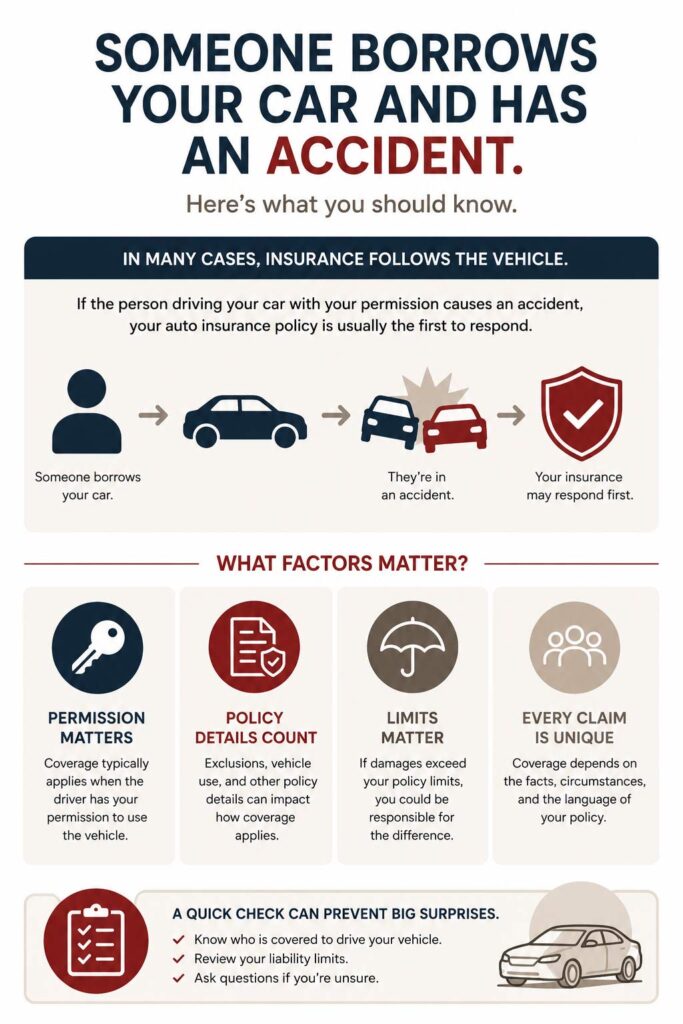
In many situations, it’s actually the vehicle’s insurance policy that responds first when there’s a covered accident. That means if someone has your permission to drive your car and they’re involved in an accident, your auto insurance policy may be the primary source of coverage.
However, every claim depends on the specific facts, policy language, and circumstances of the accident. Coverage can vary by carrier and policy, so it’s important not to assume every situation will be handled the same way.
Permission Matters
A key factor is whether the driver had your permission to use the vehicle. For example:
Typically considered permissive use:
- A friend borrowing your car to run errands
- A family member driving your vehicle with your knowledge
- A neighbor borrowing your truck for a project
Situations where coverage may become more complicated can include:
- Someone taking your vehicle without permission
- Drivers specifically excluded from your policy
- Business or commercial use that isn’t covered under your policy
- Other policy exclusions or limitations
If you’re unsure whether a particular driver would be covered, it’s worth having a conversation with your insurance advisor before handing over the keys.
What If the Damage Exceeds Your Policy Limits?
If you’re found legally responsible for damages that exceed your policy’s liability limits, there could be additional financial exposure.
That’s one reason many Colorado drivers choose liability limits that go beyond the state minimum requirements. The right amount of coverage depends on your individual situation, assets, and risk tolerance, which is why it’s worth reviewing your limits periodically rather than simply renewing the same policy year after year. If you’re not sure where to start, check out our article, How Much Auto Liability Insurance Do You Really Need?
For some individuals and families, a personal umbrella policy may also provide an additional layer of liability protection above their underlying auto and homeowners policies. You can learn more about how umbrella coverage works in What Is an Umbrella Insurance Policy—and Do You Need One?
What About the Driver's Insurance?
People often ask: “Doesn’t the person borrowing my car have their own insurance?”
Possibly.
Depending on the circumstances, the driver’s own auto insurance may become involved after the vehicle owner’s policy, but how multiple policies interact depends on the facts of the claim and the language of each policy.
Because every claim is unique, it’s difficult to predict exactly how coverage will apply until the details are reviewed.
Should You Let Someone Borrow Your Car?
Before lending your vehicle, ask yourself a few questions:
- Do I know and trust this driver?
- Do they have a valid driver’s license?
- Would I be comfortable if they were driving my family in this vehicle?
- Am I confident my insurance program is designed for situations like this?
If you hesitate on any of those questions, it may be worth reconsidering.
A Few Good Habits Can Help Reduce Risk
While no one can eliminate every possibility, these simple steps can help reduce surprises:
- Review your liability limits periodically.
- Understand who regularly drives your vehicles.
- Tell your insurance advisor about drivers in your household.
- Ask questions before lending your vehicle if you’re unsure how your policy may respond.
- Consider whether additional liability protection is appropriate for your situation.
A quick conversation today may help you avoid bigger questions later.
The Bottom Line
Lending your car may seem like a simple favor, but it can come with insurance implications if an accident occurs.
While many auto insurance policies may provide coverage when someone has permission to drive your vehicle, every claim depends on the specific facts, the policy language, and the circumstances involved.
Understanding how your coverage works before you need it can help you make more informed decisions and avoid unexpected surprises.
How Conexus Can Help
At Conexus Insurance, we believe insurance should make sense before you have to use it.
If you have questions about who is covered to drive your vehicle, whether your liability limits are appropriate, or how your current auto policy is designed, we’re happy to help you review your coverage and explain your options.
Our role is to help you understand your coverage before you need it. That way, if the unexpected happens, you’re not left wondering what your policy does—or doesn’t—cover.
This article is intended for general educational purposes only and should not be considered legal advice or a guarantee of insurance coverage. Coverage is subject to the terms, conditions, exclusions, and limits of the applicable insurance policy. Claims are evaluated based on the specific facts and policy language. Please consult your licensed insurance advisor regarding your individual circumstances.