
Your roof is one of the most important—and expensive—components of your home. It protects everything beneath it from weather, water damage, and structural issues. But in today’s insurance market, roof age has also become one of the most important factors in determining how your homeowners insurance policy is written, priced, and sometimes even whether coverage is available.
For homeowners across Colorado and beyond, understanding how roof age affects Homeowners Insurance has become more important than ever.
At Conexus Insurance, we’re seeing this shift across nearly every carrier we work with. Insurance companies are paying closer attention to roof condition, materials, and age because roof-related claims have increased significantly over the past decade.
Let’s break down why roof age matters—and what homeowners can do to stay protected.
Why Insurance Companies Care About Roof Age
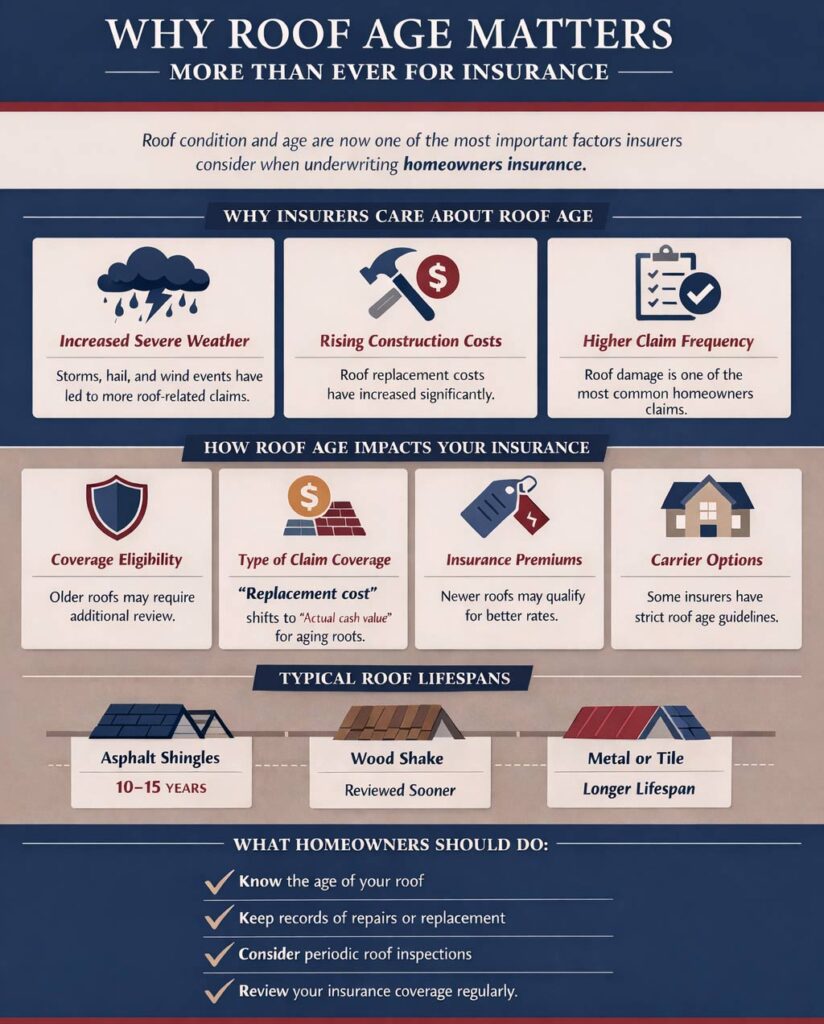
Your roof is one of the most common sources of homeowners insurance claims. Wind, hail, heavy snow, and water intrusion can all cause damage that leads to costly repairs.
Over the past several years, insurers have seen a major increase in claim severity due to:
- More frequent severe weather events
- Rising construction and material costs
- Aging housing stock in many communities
- Increased litigation related to property claims
Because of this, many insurance companies now place strict underwriting guidelines around roof age. In many cases, roofs over a certain age may trigger additional review or different coverage options.
How Roof Age Can Impact Your Home Insurance
1. Eligibility for Coverage
Some insurance companies may decline to write a new homeowners policy if a roof is beyond a certain age—especially if it shows signs of wear.
Typical guidelines may include:
- Asphalt shingle roofs: often reviewed after 10–15 years
- Wood shake roofs: often evaluated earlier
- Metal or tile roofs: may have longer acceptable lifespans
Every carrier is different, which is why working with an independent advisor can be helpful.
2. Replacement Cost vs. Actual Cash Value Coverage
One of the most significant changes homeowners may see relates to how a roof is covered after a claim.
Policies may provide:
Replacement Cost Coverage
This typically pays the cost to replace the roof with similar materials, subject to policy terms and conditions.
Actual Cash Value Coverage (ACV)
This pays the depreciated value of the roof based on age and condition.
Many insurers now move older roofs from replacement cost coverage to ACV, which can result in a lower claim payout if damage occurs.
3. Insurance Premiums
Roof condition and age can also influence your insurance premium. Newer roofs may qualify for better pricing or additional carrier options, while older roofs can increase underwriting risk.
Homes with newer roofs are often viewed as lower risk because they are less likely to experience water intrusion or storm damage.
Why This Matters in Colorado
In Colorado, roof age has become an especially important factor due to the state’s severe weather patterns.
Frequent hailstorms and high winds have led to a large number of roof claims over the years. As a result, many insurance carriers have updated their underwriting guidelines specifically for roofs in hail-prone regions.
For homeowners in areas along the Front Range, insurers may:
- Ask about roof age during quoting
- Require roof inspections
- Apply wind/hail deductibles
- Offer different coverage options based on roof condition
Understanding these factors ahead of time can help homeowners avoid surprises during the insurance process.
What Homeowners Should Do
If you’re unsure about the age or condition of your roof, it’s worth taking a few proactive steps.
Know Your Roof’s Age
If you recently purchased your home, check the seller’s disclosures or inspection report. These documents often include roof details.
Maintain Documentation
Keep records of roof replacements, repairs, and inspections. Insurers sometimes request this information.
Consider a Roof Inspection
A professional inspection can help identify small issues before they turn into major problems.
Review Your Insurance Coverage
It’s a good idea to periodically review your policy to understand how your roof is covered.
If you’d like to better understand how your roof condition impacts your coverage, our team is always happy to help review your policy and answer questions about Homeowners Insurance.
The Bottom Line
Roof age has become one of the most important factors in homeowners insurance underwriting. As insurance companies continue to adapt to weather trends and rising claim costs, roofs are receiving more scrutiny than ever before.
The good news is that with the right guidance and proactive maintenance, homeowners can stay ahead of these changes and keep their homes well protected.
At Conexus, our approach is simple: People First, People Protected. We believe insurance should be more than just a policy—it should be a partnership that helps protect what matters most.
If you have questions about your coverage or want to review your current policy, our team is always here to help.
This article is for informational purposes only and is not intended to provide legal or insurance advice. Coverage availability, terms, and conditions vary by carrier and policy. Please consult with a licensed insurance professional regarding your specific situation.