
For many employers, employee benefits follow a familiar cycle: renewal approaches, rates arrive, options are reviewed, decisions are made, and open enrollment begins. Then benefits move to the back burner until the following year.
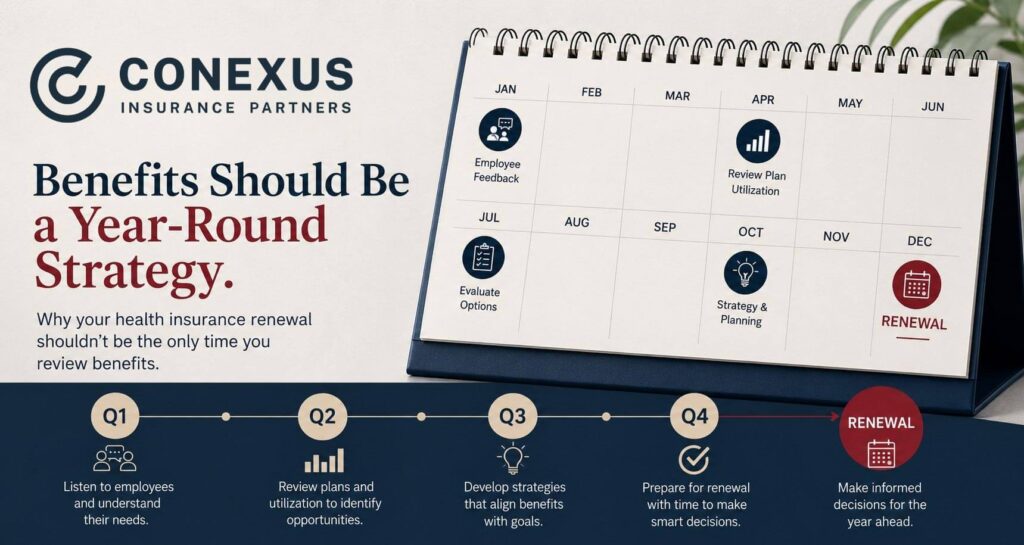
But a strong employee benefits strategy shouldn’t be something you think about only at renewal.
For Colorado employers managing healthcare costs while trying to attract and retain great people, reviewing benefits throughout the year can help identify opportunities, improve employee understanding, and make the next renewal less reactive.
Your Workforce Doesn't Stay the Same All Year
A lot can change between renewals.
You may hire employees, lose employees, add new positions, expand into another state, or simply see the needs of your workforce evolve. The benefits that made sense a year or two ago may not necessarily be the best fit today.
That doesn’t mean employers need to constantly change their plans. It means periodically asking an important question:
Do the benefits we offer still make sense for the workforce we have today?
Employee feedback can be particularly helpful. What questions are employees asking? Which benefits seem to matter most? Are there benefits employees don’t understand or aren’t using?
Those conversations can help employers identify areas worth exploring well before renewal.
Your Benefits Data Can Tell You a Lot
Enrollment patterns and employee questions can provide useful insight into how your benefits program is working.
If very few employees select a particular medical plan, it may be worth understanding why. If employees repeatedly ask how their deductible works or don’t understand the difference between plan options, the issue may be education rather than plan design.
The same is true for benefits such as HSAs, voluntary benefits, disability insurance, telehealth, and other resources employees may have access to but not fully understand.
Not every trend requires a change. Sometimes better communication is the answer.
Reviewing this information throughout the year gives employers and their benefits advisor time to identify opportunities instead of trying to solve everything during open enrollment.
Cost Management Should Start Before Renewal
Healthcare costs remain a significant concern for employers and employees alike. But managing those costs shouldn’t begin when the renewal rates arrive.
Waiting until renewal can turn benefits planning into a shopping exercise focused primarily on premium.
Premium matters, but so do deductibles, copays, coinsurance, prescription coverage, provider networks, employer contributions, and the amount employees ultimately pay when they use their healthcare.
Starting the conversation earlier gives employers more time to evaluate potential strategies.
Depending on the organization, that might mean reviewing plan design, contribution strategies, plan choices, voluntary benefits, funding arrangements, or other options. Not every strategy is appropriate for every employer, which is why having time to understand the alternatives matters.
The goal isn’t simply to find the cheapest plan. It’s to find the right balance between cost, coverage, employee needs, and the organization’s overall benefits strategy.
Your Benefits Advisor Should Be a Year-Round Resource
Your benefits broker should do more than deliver your renewal.
A good advisor can help you throughout the year by reviewing your benefits strategy, answering questions, helping employees understand their benefits, evaluating available options, and preparing for renewal before deadlines are looming.
That might include periodic strategy conversations, reviewing enrollment trends, discussing workforce changes, or helping identify areas that deserve a closer look.
It doesn’t require constant meetings or continually changing your benefits.
It simply means having an ongoing conversation.
When renewal does arrive, you already have a clearer understanding of what’s working, what isn’t, and what you want your benefits program to accomplish.
Make Benefits a Strategy, Not Just a Renewal
Employee benefits are a significant investment for many Colorado employers. They can also play an important role in how employees view their overall compensation and their experience with your organization.
That’s why the benefits conversation shouldn’t begin and end with one question:
“What did our renewal come in at?”
A better question is:
“Is our benefits program doing what we need it to do?”
At Conexus Insurance, we work with Colorado employers throughout the year to evaluate their employee benefits strategy, prepare for renewal, and make informed decisions as their businesses and workforces evolve.
If your benefits conversations only happen at renewal, let’s talk about what a year-round approach could look like for your organization.
This article is for general informational purposes only and is not intended to provide legal, tax, financial, or insurance advice. Employee benefit plans, insurance coverage, eligibility requirements, costs, and available options vary. Employers should review applicable plan and policy documents and consult appropriate professional advisors regarding their specific circumstances.